Khudayar Khan Palace (Khudayar Khan)
Khudayar Khan Palace (Khudayar Khan)
The last great remnant of the Kokand Khanate, Khudayar Khan Palace impresses with its polychrome ceramics and sculpted stuccowork. A regional museum within its walls traces the history of this powerful Central Asian court.
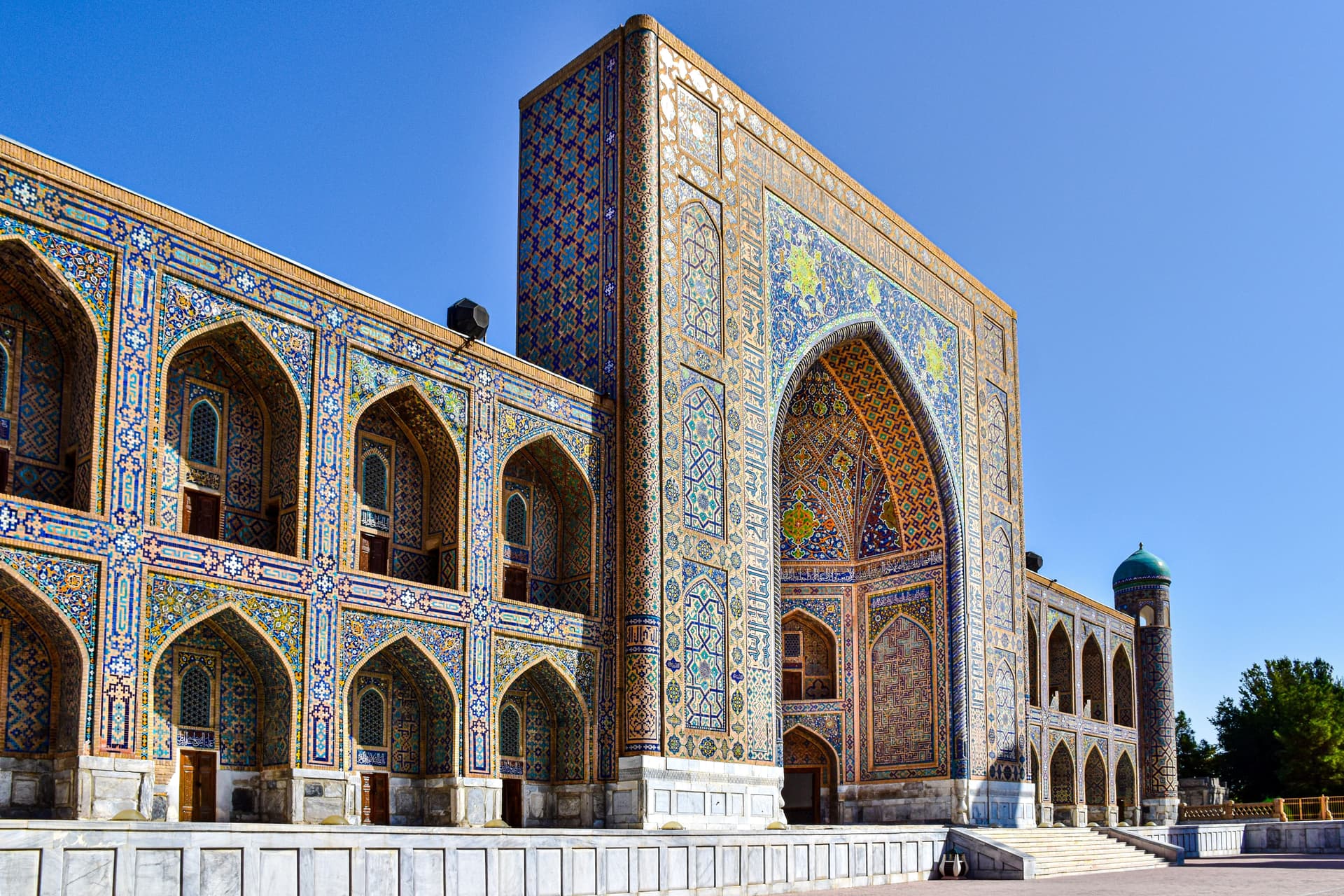
Khudayar Khan Palace dominates the center of Kokand, the former capital of the khanate of the same name. Built in the nineteenth century, it stands as one of the rare surviving examples of Central Asian palatial architecture. Its façades clad in polychrome ceramics and its rooms adorned with sculpted ganch plasterwork bear witness to the splendor of a court that once ruled much of the Fergana Valley.
Quick facts
- Admission : paid (state museum rate)
- Status : regional museum of history and art
- Suggested duration : 1 to 1.5 hours
- Access : downtown Kokand, walking distance from the central bazaar
What to see
The palace comprises about twenty rooms open to the public. Painted wooden ceilings, niches carved in stucco plasterwork (ganch), and turquoise-blue faience tiles make up the core of the interior decoration. The museum's collections showcase khanate artifacts: weapons, coins, embroidered textiles, and historical documents. The interior courtyard, ringed by a colonnade, offers a quiet setting to study the architecture up close.
History and context
Kokand was the capital of an independent khanate from the eighteenth century until the Russian conquest of 1876. Khudayar Khan, the last reigning sovereign, commissioned this palace beginning in 1871. The original structure contained dozens of rooms; only a portion survived the ravages of the Soviet period. Following the conquest, the Russians first installed a military administration here, later converting it into a museum.
Highlights of your visit
The main façade
The entrance portal, framed by two towers, is entirely covered in geometric and floral ceramics. It is the palace's most photographed feature. Late morning light brings out the blues and greens of the faience.
The reception halls
The state rooms retain their original decoration: pierced stuccowork, vegetal wall paintings, and coffered ceilings. Some chambers display reconstructions of court furnishings.
The museum collections
The regional museum houses suzani (traditional Fergana embroideries), local ceramics, and artifacts related to the khanate's history. Captions appear in Uzbek and Russian.
Photography tips
The façade faces southeast: morning light is ideal for capturing the ceramics. Indoors, lighting is dim—a camera with strong low-light performance is helpful. Photography is generally permitted in the museum rooms, but check with staff at the entrance.
Location and access
The palace sits in the heart of Kokand, a few minutes' walk from Dehqon Bazaar. Kokand is linked to Tashkent by train (approximately 5 hours) and by road through the Fergana Valley. From Fergana or Andijan, shared minibuses (marshrutkas) serve Kokand regularly. Wheelchair access inside the palace is limited due to thresholds and stairs.
Nearby
- Jami Mosque in Kokand — a grand nineteenth-century mosque, a few hundred meters from the palace.
- Modari Khan Mausoleum — mausoleum of Khudayar Khan's mother, in the same historic quarter.
- Dehqon Bazaar — vibrant marketplace where locals shop, ideal for Fergana spices and textiles.
Frequently asked questions
Yes. Kokand is a city in the Fergana region of Uzbekistan. It is not in Kyrgyzstan, despite the geographical proximity of the two countries.
Plan for one to one and a half hours to walk through the open rooms and interior courtyard at a leisurely pace.
The palace is a civil museum, not an active place of worship. No specific dress code is required, though modest attire is respectful.
Yes. The Jami Mosque and Modari Khan Mausoleum are nearby. Half a day is sufficient to visit all three sites on foot.
Generally yes, though some rooms may have restrictions. Confirm with museum staff at the entrance.
Interested in this visit?
We can include it in your personalised itinerary.