Kazarman
Kazarman is a remote settlement in central Kyrgyzstan, perched in the gorges of the Kara-Darya river. Petroglyphs, arid steppe landscapes and mountain pass roads make it an authentic stop for travelers seeking the beaten path.
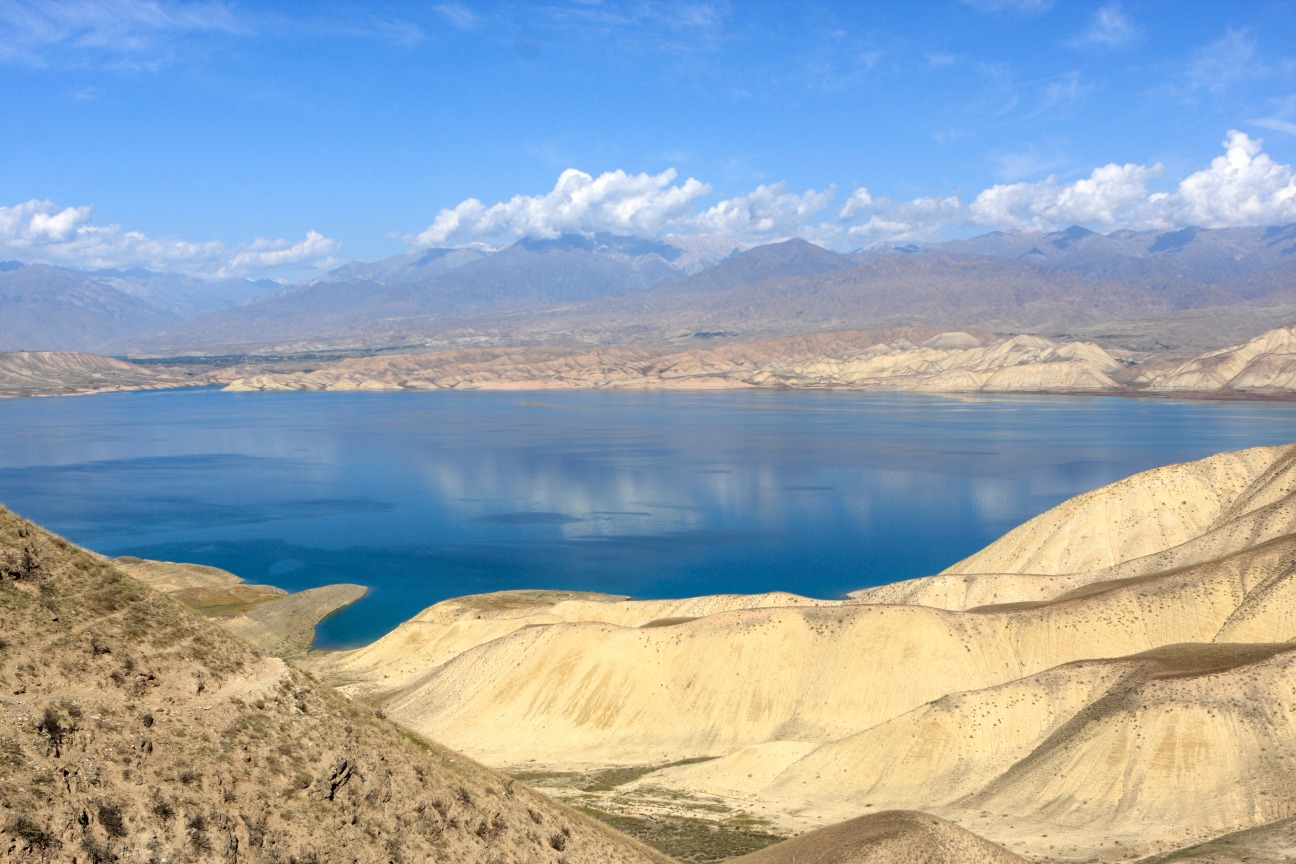
Kazarman is an isolated town in central Kyrgyzstan, nestled in the gorges of the Kara-Darya river, at the border between Jalal-Abad and Naryn provinces. Perched at over 1,800 metres altitude, it serves as a waypoint for travellers crossing the Tien Shan passes along the road connecting Jalal-Abad to Naryn. The landscape of arid steppes, ochre cliffs and enclosed valleys makes it a striking stop on off-the-beaten-path itineraries in Kyrgyzstan.
What to see there
The Kazarman region is chiefly known for its prehistoric petroglyphs, carved into rocks throughout the surroundings. These representations of animals and hunting scenes testify to ancient human occupation in these valleys. The landscape itself is the main draw: deep gorges, tumultuous river, bare hills and, in the distance, the snow-capped peaks of the Tien Shan.
History and context
The area around Kazarman was frequented from antiquity by nomadic peoples and caravans travelling Central Asia's interior routes. Some of the petroglyphs in the region date to the Bronze Age and Iron Age. During the Soviet era, Kazarman functioned as a local administrative centre, with mining activity in the surrounding area.
Highlights of the visit
Petroglyphs of the region
Rock art sites are recorded in valleys near Kazarman. The petroglyphs depict deer, ibex and riders. A local guide is strongly recommended to locate the sites, which are often accessible only on foot or horseback.
The mountain pass road
The road connecting Kazarman to Naryn crosses several high-altitude passes. This route, navigable in summer, offers panoramas of high steppe landscapes that are virtually desert-like. The road is notoriously difficult and rarely travelled—precisely what draws travellers seeking isolation.
Local nomadic life
In summer, Kyrgyz families set up their yurts in the alpine pastures around Kazarman. It is possible to meet herders and, weather permitting, to share a meal or night in a yurt—an experience best arranged through a local agency.
Photography tips
Morning and evening light reveals the ochre and rust tones of the cliffs framing the valley. Petroglyphs photograph best in raking light (early morning or late afternoon), which brings out the relief carving. Avoid midday, when flat light erases detail.
Location and access
Kazarman lies in Jalal-Abad province, several hours' drive from Jalal-Abad city. The road from Jalal-Abad is partly paved; some sections are unmade track. From Naryn, the road crosses passes that close in winter. There is no reliable regular transport: a 4×4 vehicle with driver, arranged from Bishkek, Jalal-Abad or Naryn, is the safest option.
Nearby
- Naryn — provincial town at the heart of the Tien Shan, a departure point for high-altitude treks.
- Jalal-Abad — spa town in southern Kyrgyzstan, accessible by main road.
- Tash-Rabat — medieval stone caravanserai, one of Central Asia's best preserved, accessible from Naryn.
Frequently asked questions
June to September, when the passes are open and tracks passable. Outside this period, roads may be cut by snow.
Yes. The sites are unmarked and hard to find without local knowledge. A guide or driver from the region is essential.
Very basic accommodation (guesthouses with locals) exists in the town. Conditions are rustic. A yurt on the alpine pastures is possible in summer, to be arranged in advance.
No. A 4×4 vehicle is necessary on several sections, especially after Kazarman heading towards Naryn.
Its remoteness, difficult roads and lack of tourist infrastructure make it a destination better suited to experienced and self-reliant travellers.
Want to discover this destination?
Our local advisors design your tailor-made trip.