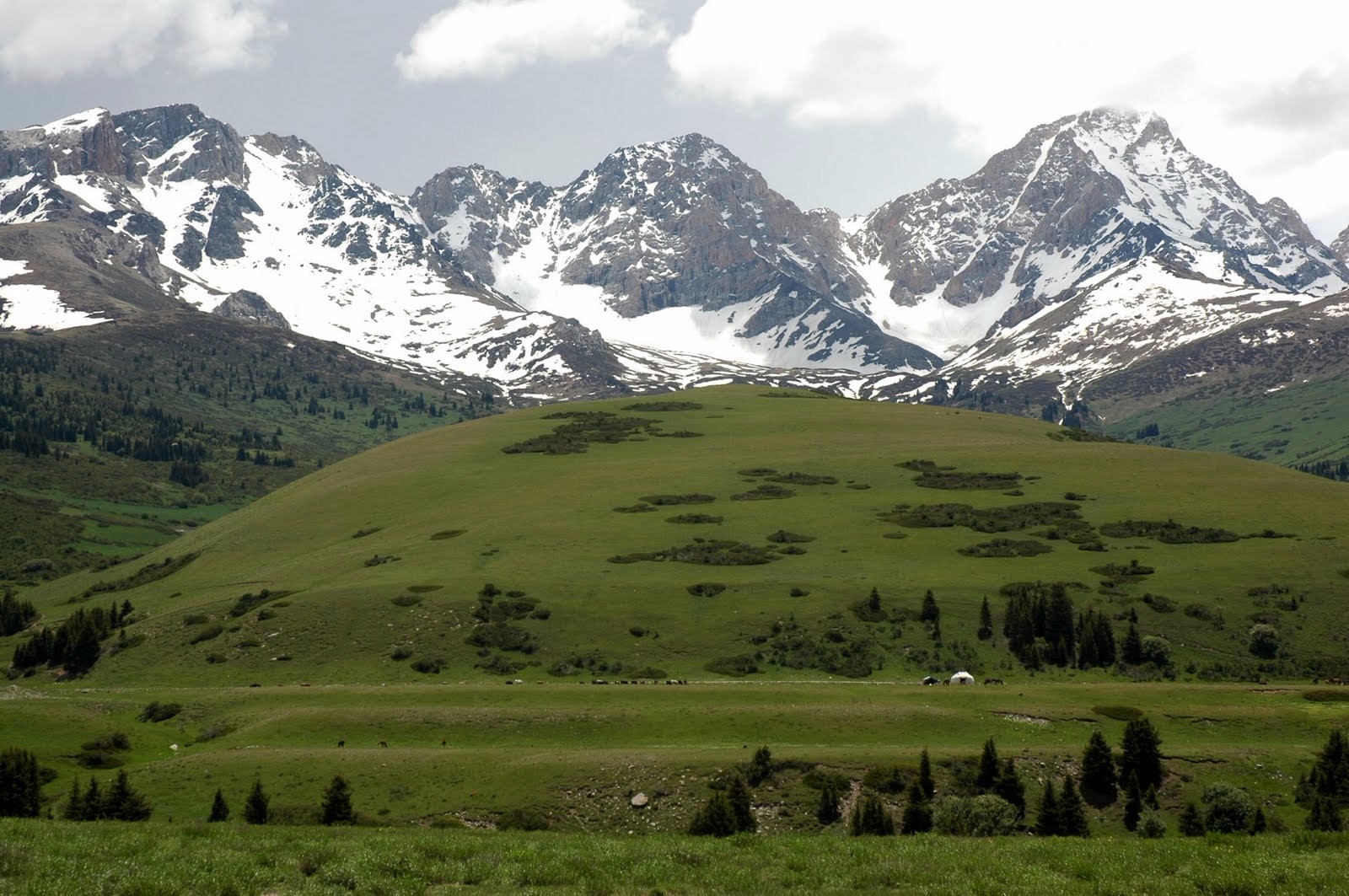
Kel-Suu
Nestled in a limestone canyon of the Tian Shan, Kel-Suu Lake is reached by horseback before exploring by inflatable boat. Border permit required, accessible July-September only.
Kel-Suu Lake lies hidden in a remote gorge of the Tian Shan, in the far southeast of Naryn region, just kilometres from the Chinese border. Fed by underground springs, it emerges at the foot of limestone cliffs streaked with red and ochre. Access requires a horseback ride or trek from the village of Kara-Suu, making it a destination for travellers willing to venture beyond paved roads.
Quick facts at a glance
- Access: track from Kara-Suu village (Naryn district); 4×4 vehicle essential to base camp, then horse or hiking.
- What to bring: trekking or riding gear, warm clothing even in summer (high altitude).
- Recommended duration: minimum one night in a yurt or tent to enjoy the site at sunrise.
- Season: July to September — the lake is inaccessible the rest of the year due to snow.
- Permit: border zone area; a border zone permit is required, to be obtained before departure.
What to see
The lake occupies a narrow canyon: its waters shift from emerald green to deep blue depending on the light. The limestone cliffs plunge directly into the water in places, making a full circuit on foot impossible. Inflatable boats allow exploration of secondary channels and partially submerged caves. The alpine meadows around the base camp host herds of horses and, occasionally, golden eagles.
History and context
Kel-Suu literally means "lake from nowhere" in Kyrgyz, a reference to its karst origin: water springs from underground sources rather than glaciers. The lake has long been frequented only by nomadic herders from the Naryn region during summer pasturing. It only appeared on tourist circuits in the early 2010s, driven by the development of Kyrgyz community-based tourism.
Highlights of the visit
The boat crossing
Local guides offer inflatable boats to navigate the canyon. It's the only way to see the rocky alcoves and the coloured reflections of the cliffs on the water. Plan for waterproof clothing: splashes are frequent.
Sunrise over the cliffs
From the base camp, the first rays of light turn the brick-red walls to vivid orange. Staying overnight is essential to witness this spectacle before other groups arrive.
The approach horseback ride
The ride from Kara-Suu crosses high-altitude pastures (jailoos) and snow-covered passes for part of the year. This journey is a central experience in itself, not merely a means of transport.
Photography tips
Morning light is most favourable: it strikes the east-facing cliffs directly and creates sharp reflections on still water. At midday, the canyon is often in partial shadow. From the boat, shoot upward angles to capture the cliffs in their true height. Protect your gear from moisture during the crossing.
Location and access
Kel-Suu is located in Naryn district, approximately 100 km southeast of Naryn city. The paved road ends well before the site; the final track requires a 4×4. Most travellers arrange their visit from Naryn, where local agencies provide horses, guides and yurts. The border zone permit must be requested in advance from the Kyrgyz border service (GKNB), ideally through a local agency.
Nearby attractions
- Song-Köl Lake — another emblematic high-altitude lake in Kyrgyzstan, accessible from Naryn, surrounded by jailoos and nomadic yurts.
- Naryn city — main logistical departure point, with bazaars and accommodation.
- Naryn River Canyon — spectacular gorges carved by the Naryn River downstream from the lake.
Frequently asked questions
Yes. The lake is located in a border zone with China. A border zone permit is mandatory. It can be obtained from the Kyrgyz GKNB, often facilitated by a local agency in Naryn or Bishkek.
July and August offer the best conditions: passable tracks, the lake fully visible and supportable temperatures. By September, the site remains accessible but nights become very cold.
Basic experience is helpful: the horseback journey lasts several hours over rough terrain. Local guides accompany groups and manage the horses, but complete inexperience can make the journey difficult.
Yes. Community yurts are available near the base camp, managed by local families. It is also possible to pitch a tent. Spending a night on site is strongly recommended to enjoy the sunrise.
The water is very cold, even in mid-summer, due to the altitude and underground springs. Swimming is technically possible but not advised for safety reasons in the canyon.
Want to discover this destination?
Our local advisors design your tailor-made trip.