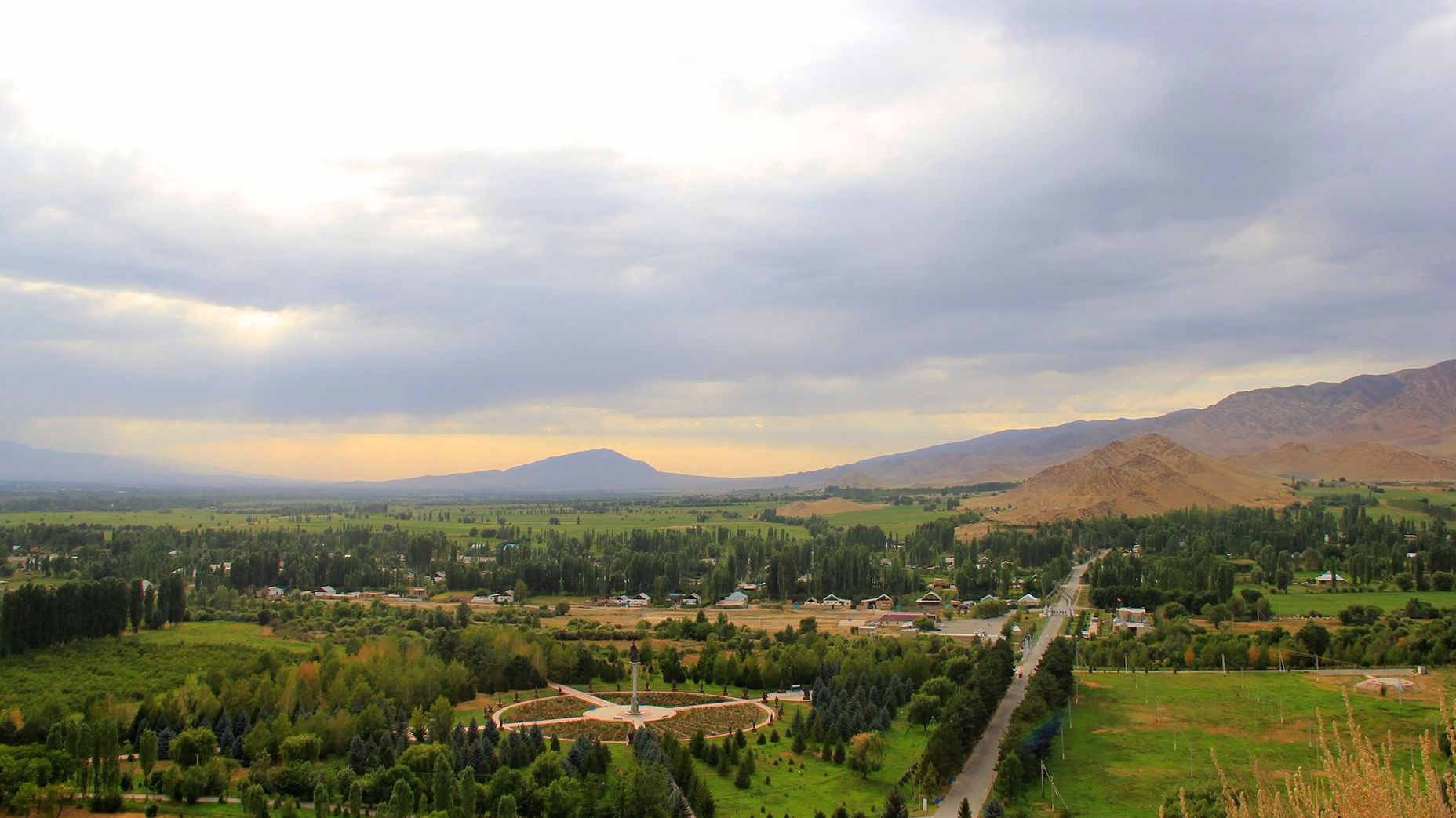
Tashkent
Tashkent, capital of Uzbekistan, blends the Chorsu Bazaar, the Khast Imam complex and Soviet avenues. An ideal gateway to Samarkand and Bukhara on the Silk Road.
Tashkent is the capital of Uzbekistan, not Kyrgyzstan — yet it remains the largest city in Central Asia, a crossroads between Soviet heritage and Islamic renewal. Its bustling bazaars, turquoise-tiled mosques and tree-lined avenues make it an unmissable gateway to the Silk Road. The city blends Stalinist architecture, 16th-century madrassas and modern quarters in full transformation.
Practical information at a glance
- Access: Islam Karimov International Airport, served from Paris, Istanbul, Moscow and Dubai.
- Getting around: Clean and efficient metro, taxis and local apps (Yandex Go).
- Dress code: Smart dress required in mosques and madrassas (shoulders and knees covered).
- Recommended duration: 2 to 3 days to cover the main sites.
- Currency: Uzbek Som (UZS); ATMs are plentiful downtown.
What to see
The old quarter (Eski Shahar) concentrates most of the historical heritage: the Khast Imam mosque, the Chorsu bazaar beneath its blue domes, and the Kukeldash madrassa. The Soviet centre offers wide squares, fountains and monumental buildings from the 1960s-1970s, rebuilt after the 1966 earthquake. The Museum of the History of Uzbekistan houses major archaeological collections.
History and context
Tashkent is one of Central Asia's oldest cities, inhabited since at least the 2nd century BC. Conquered by the Arabs in the 8th century, then by the Mongols, it became part of the Russian Empire in 1865 and capital of the Uzbek Soviet Socialist Republic in 1930. The 1966 earthquake destroyed much of the old city; the USSR rebuilt it rapidly, giving it its current Soviet face. Independence was declared in 1991.
Highlights of your visit
The Khast Imam complex (Hazrati Imam)
This religious complex groups the great Friday mosque, several madrassas and an Islamic library. It houses one of the world's oldest Qurans, the Quran of Uthman, a 7th-century manuscript. Entry to the complex is free; the library may require permission.
The Chorsu Bazaar
Beneath its great turquoise domes, this covered market is the city's oldest and most lively. Spices, dried fruits, non (non) bread, meats and handicrafts rub shoulders here. Arrive early in the morning for the most authentic atmosphere.
The Kukeldash madrassa
Built in the 16th century, this madrassa is one of Central Asia's largest. Its brick façade and arcaded galleries make it a remarkable example of late Timurid architecture. It sits directly adjacent to Chorsu Bazaar.
The Museum of the History of Uzbekistan
Its collections span prehistory, Sogdian civilisations, the Islamic period and the Soviet era. The scale models of Silk Road cities and archaeological objects from Samarkand and Khiva are particularly rich.
Amir Timur Park and the Soviet downtown
An equestrian statue of Tamerlane stands at the centre of a tree-lined park surrounded by imposing Soviet buildings. The neighbouring Amir Timur Museum traces the history of the Timurid empire with detailed objects and reconstructions.
Etiquette and visiting rules
- Cover shoulders and knees to enter any mosque or madrassa.
- Women must cover their heads inside active mosques.
- Remove your shoes before entering prayer spaces.
- Ask permission before photographing worshippers in prayer.
- Speak quietly in religious spaces.
Tips for photography
Golden morning light is ideal for photographing the Chorsu domes and the Kukeldash façade. The Khast Imam complex is most photogenic in late afternoon. Avoid using flash inside mosques. The rooftops of Chorsu Bazaar offer a sweeping view of the stalls — ask local vendors for access.
Location and access
Tashkent sits in north-east Uzbekistan, about 350 km from Samarkand and 580 km from Bukhara. Fast trains (Afrosiyob) link Tashkent to Samarkand in under two hours. The urban metro, opened in 1977, is one of Central Asia's most beautiful with stations decorated with mosaics and marble. Taxis are inexpensive and Yandex Go works well around the city.
Nearby
- Samarkand — The Registan and Timurid mausoleums, less than two hours by fast train.
- Bukhara — Museum-city of medieval Islam, accessible by train or plane.
- Chimgan — Mountain resort in the Tian Shan, about 80 km north-east, ideal for summer hiking.
- Fergana Valley — Silk handicrafts and ceramics, accessible by train or plane from Tashkent.
Frequently asked questions
Spring (April-May) and autumn (September-October) offer pleasant temperatures. Summers are very hot (often above 35°C) and winters cold but dry.
French nationals benefit from visa-free access for tourist stays. Check conditions with the embassy before departure, as rules can change.
Two days are enough for the main sites. Three days allow you to explore the old quarter, museums and make a trip to Chimgan.
Yes, this is the classic Silk Road route. The Afrosiyob fast train links Tashkent to Samarkand in under two hours, then Samarkand to Bukhara in around 1.5 hours.
It is generally permitted in outdoor spaces. Inside active mosques, always ask permission and avoid photographing worshippers in prayer.
Shoulders and knees covered at all times. Women must cover their heads inside active mosques. Pack a lightweight scarf in your bag.
Want to discover this destination?
Our local advisors design your tailor-made trip.