Choosing Your Gear for Trekking in Kyrgyzstan
Kyrgyzstan, with its endless mountains and eternal snows, attracts more and more travelers for its wild and spectacular nature.
Kyrgyzstan, with its endless mountains and eternal snows, attracts more and more travelers for its wild and spectacular nature. It's an ideal destination for trekking, to encounter untouched flora and fauna and the incredible nomadic culture of the Kyrgyz people. Solo, with family, or accompanied by an English-speaking guide and even porters, you can set out on foot to discover Kyrgyzstan's most beautiful landscapes: emerald lakes, towering peaks, imposing glaciers, or ochre-colored steppes... Here are some tips for succeeding on your Kyrgyzstan trek and preparing your pack well before you leave:
Choosing Your Backpack
Two things are essential to enjoying your trek in Kyrgyzstan: good physical preparation, and a well-prepared pack. Before heading out on a trek, it's important to choose a backpack adapted to your body shape: it's strongly recommended to try it on in a store rather than ordering online. When it comes to backpacks, lightness shouldn't be your first criterion, but rather comfort. Indeed, a refined carrying system allows better weight distribution on your body, even if it can add a few hundred grams to the pack.
As for the volume you'll need, it depends on your itinerary in Kyrgyzstan. If you're trekking where nights are spent in yurts or organized camping, you can opt for a smaller pack of around 40L. You won't need to carry your tent or food. But if you're trekking with wild camping, you'll need a 70L pack at least, possibly more. In that case, you'll need to bring everything essential for survival: a stove, food, a sleeping bag, a mat, and a tent, in addition to your clothes. In any case, get a rain cover for your pack: this will keep all your equipment dry in case of rain.
Choosing Your Camping Gear
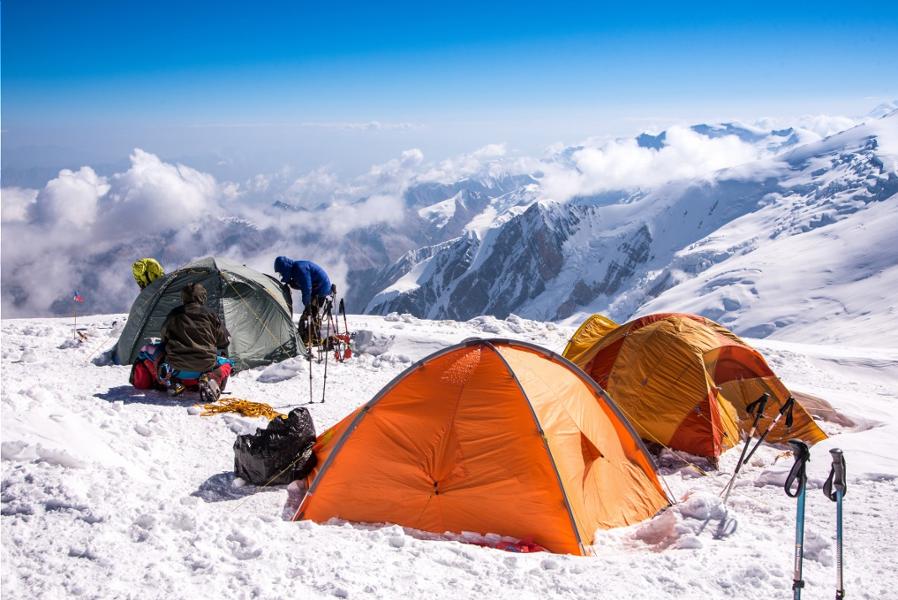
One of the advantages of Kyrgyzstan is that you can camp wherever you want: on a wild beach beside Issyk-Kul Lake, at high altitude at the foot of a peak, or next to a magnificent glacier—the choice is yours for where to spend your nights. You'll need to pack all the essentials for camping, prioritizing lightweight yet durable gear.
Choosing Your Tent
For a trip to Kyrgyzstan, plan for a three-season tent. In summer, at high altitude, snowfall and strong winds are common. You need a tent that's highly waterproof, can withstand wind, and retains heat. Don't get a quick-setup tent, as these are only suitable for low-altitude camping. A free-standing tent is easier to use in any terrain, since while trekking in Kyrgyzstan, you'll often need to set up camp on rocky ground. But remember to secure your tent with stakes in case of storms. Choose a tent with a large vestibule—that is, free space between the sleeping area and the fly sheet. This lets you store your backpack and keep it protected from the elements.
If you're planning your trek outside summer, at very high altitude (like on the Inylchek Glacier), or if you're doing mountaineering, opt for a four-season tent.
Choosing Your Sleeping Bag
Temperatures drop quickly in the mountains, especially at night. Negative temperatures at high altitude are not uncommon, so you need to prepare. Choose a warm sleeping bag that handles 0°C or -5°C at minimum. For high-altitude treks, glacier camping, or trekking outside summer, you'll need a warmer sleeping bag (-15°C to -20°C). A sleeping bag liner is lightweight and can add a few degrees—always a useful accessory.
Choosing Your Mat
Important criteria for choosing a mat are comfort, weight, and especially insulation. While inflatable mats are compact and generally more insulating, they take more time to set up and break down. On an itinerant trek where you move camps each evening, this can be inconvenient. Favor a foam mat or a self-inflating mat instead.
Choosing Your Cooking Gear
For cooking, you'll need a stove. You can buy gas cartridges in Bishkek or Karakol before your trek. But for high altitude, an alcohol-fuel stove is better; though pricier and harder to find, it's much more economical. At high altitude, gas burns quickly, whereas alcohol burns better and lets you prepare more meals. Also bring lightweight pots, bowls and spoons, plus a knife or, better yet, a Swiss Army knife. Don't forget a cloth to rinse your dishes.
Choosing Your Clothing
Once you've picked your gear, it's time to sort through your clothes. On a trek, you need to lack for nothing, but not overload yourself either, as a heavy pack wears you out quickly. You can leave some items at your starting guest house or in your vehicle if you're traveling with an agency: this lets you pack a little extra and trim down before heading out. Remember that mountain weather changes rapidly: you need to prepare for all types of conditions.
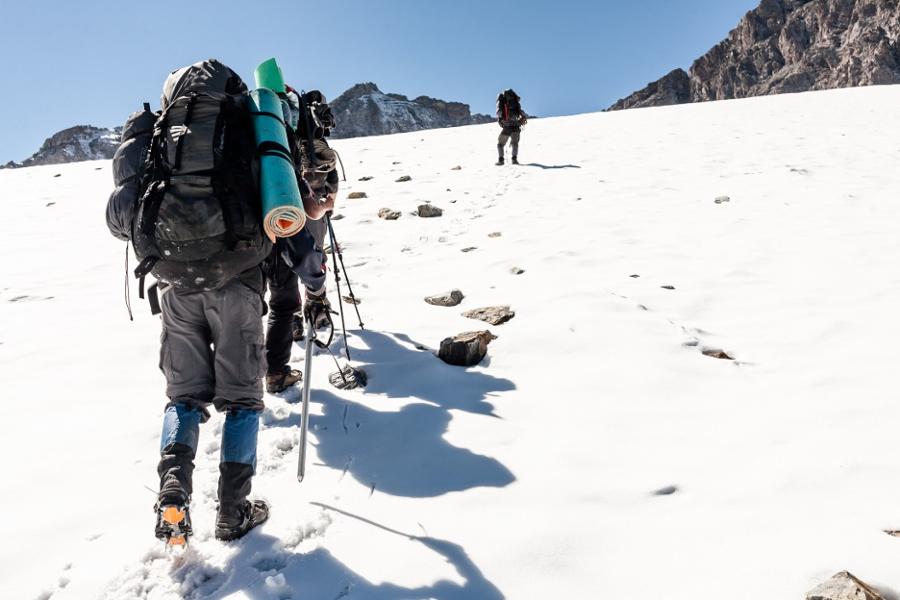
The most important thing is choosing quality hiking boots. You absolutely must wear them at home before taking them on vacation. For trekking in Kyrgyzstan, get high-cut, waterproof and insulated boots, preferably in Gore-Tex. You need a high sole with good grip. Pick boots designed for high-altitude hiking: they handle all terrain types and keep your feet warm. If you've planned technical sections—for example, climbs requiring crampons—then mountaineering boots will be necessary.
Here are the essential clothes for a Kyrgyzstan trek:
A few short-sleeved t-shirts and at least one long-sleeved
A compact down jacket
Two fleece layers
A raincoat and windbreaker
Two durable, waterproof pants. Try to choose pants with reinforced knees and ankles.
Extra socks
For women: a sports bra
A bandana
A beanie and gloves
A cap or sun hat
A legging for sleeping or wearing under pants in extreme cold
Gaiters for high-altitude treks
Sandals for evenings at camp, or perhaps lightweight trainers if your hiking boots get wet (during heavy rain or river crossings)
Choosing Your Accessories
Round out your pack with these accessories:
Trekking Poles
Trekking poles are really recommended for a Kyrgyzstan trek. They help carry your pack, reduce strain on your knees especially on descents, and improve balance on difficult crossings. Get telescopic poles that pack away easily.
First-Aid Kit
The first-aid kit is one of the most important items in a trekking backpack. Take time to prepare it well. You should include:
All your medications
Basic first-aid essentials: antiseptic, adhesive tape, small scissors, tweezers, tick remover, sterile gauze pads, blister treatments, bandages, muscle cream, surgical gloves, wound closure strips for deep cuts.
An insect repellent
Cream for insect bites
Good sunscreen
Pain relievers and digestive medications
Toilet paper
An emergency blanket
Other Accessories
To gear up properly for a Kyrgyzstan trek, also consider bringing:
Two water bottles, ideally insulated with wide mouths (for about 2L of water)
A headlamp
A multi-tool
Sunglasses with UV category 3 minimum
A camera with spare battery. A compact, rugged camera is best for trekking—it's light and won't fear drops or bad weather.
A small notebook to jot down your impressions
Your personal documents in a waterproof pouch
A satellite phone if needed
Know that if you travel with our Kyrgyz'What agency, your English-speaking guide will be equipped with all necessary safety gear! Our agency also provides all camping equipment to our clients.
Frequently asked questions
Volume depends on your trek type. For an itinerary with yurt or organized camping nights, a 40L pack suffices. For a trek with wild camping where you carry tent, food, and cooking gear, plan for a 70L pack or larger.
A three-season tent is recommended for summer treks in Kyrgyzstan. It must be waterproof, wind-resistant, and free-standing to adapt to rocky terrain. For high-altitude (Inylchek Glacier) or mountaineering trips, choose a four-season tent.
For summer trekking at moderate altitude, choose a sleeping bag comfortable to 0°C or -5°C. At high altitude, on glaciers, or outside summer, a sleeping bag rated -15°C to -20°C is essential for safe nights.
Yes, you can buy gas cartridges in Bishkek or Karakol before your trek. However, at high altitude, gas burns quickly. An alcohol-fuel stove is better suited and more economical, though harder to find and pricier upfront.
Trekking poles are highly recommended in Kyrgyzstan. They lift some backpack weight, protect your knees on long descents, and improve balance on river crossings and unstable ground. Choose telescopic models that pack easily.
Get high-cut, waterproof hiking boots (ideally Gore-Tex) with a high, non-slip sole. Wear them several times at home first. For technical climbs needing crampons, mountaineering boots are required.