The Country's Demographics
Kirghizistan is a country with nearly 6 million inhabitants, the majority of whom are rural dwellers. Kirghizistan has a very young population with 30% under the age of 15 and only 5% over 65 years old, with an average age of 24 years.
Kirghizistan is a country with nearly 6 million inhabitants, the majority of whom are rural dwellers. Kirghizistan has a very young population with 30% under the age of 15 and only 5% over 65 years old, with an average age of 24 years.
The population of Kirghizistan is predominantly composed of Kyrgyz people but includes many other ethnic groups and nationalities.
Demographic Data
Total population: 5,957,000
Natural growth rate: 2.1%
Urban population: 35.7%
Density: 31 inhabitants/km²
Average age: 24.0 years
Life expectancy in years:
- Men: 65.5 years
- Women: 72.7 years
Labor force participation rate: 71.2% (Source: UN – United Nations Organization, 2014)
Ethnic origins:
- Kyrgyz: approximately 71% of the population,
- Uzbek: approximately 15%,
- Russians: approximately 8%,
- Dungans, Ukrainians, Uyghurs and other ethnic groups (including Tajiks, Turks, Kazakhs and Tatars) constitute approximately 6% of the population.
Religion: Muslim 75%, Orthodox (Russian) 20%, other 5%
The Kyrgyz People
The Kyrgyz descend from Turkic ethnic groups. After traveling extensively, from Siberia to the Yenisei River, the Kyrgyz eventually settled in the Altai and Dzungaria. To free themselves from the rule of the Kokand kingdom, they joined the Russian Empire and settled in the northern part of the country. The Russians eventually went to war with the Kokand kingdom and succeeded in overthrowing them. Logically, they then established themselves in the southern region and created the Turkestan Republic, which at the time included Semirechye, Syr-Darya, Fergana and Samarkand.
In 1916, some Kyrgyz began fleeing Soviet repression and migrating to neighboring countries. This is why some are still found today in China and Uzbekistan.
A former nomadic people, the Kyrgyz are today more settled but continue to raise herds of sheep, yaks and horses.
The Kyrgyz are now the majority, and their numbers continue to grow since independence.
The Kyrgyz are primarily of Muslim faith but have nevertheless preserved their shamanic traditions.
Other Ethnic Groups
Beyond the Kyrgyz, Kirghizistan is home to many other ethnic groups:
The Uzbeks: this ethnic group descends from Turkic peoples and lives mainly in the Fergana Valley. The Uzbeks constitute the largest minority in Kirghizistan with 15% of the population. They maintain close ties with other ethnic groups, especially with Uyghurs and Kazakhs. The Uzbeks are Sunni Muslims.
Although Kyrgyz and Uzbeks live together very well today, they have nevertheless experienced violent clashes, notably in 1990 in Osh during independence and in 2010 in the Fergana Valley.
The Russians: they constitute 9% of the population of Kirghizistan. Much more numerous in past decades, Russians have gradually migrated back to their homeland, especially since independence. They are primarily concentrated in the north of the country, notably in the capital Bishkek.
The Uyghurs: they represent only 1% of the population. The Uyghurs come mainly from the autonomous province of Xinjiang in China. Many fled their country due to Chinese repression. As practitioners of Islam, they can more easily establish themselves in Kirghizistan and draw closer to the Uzbeks, who closely share Uyghur customs and traditions.
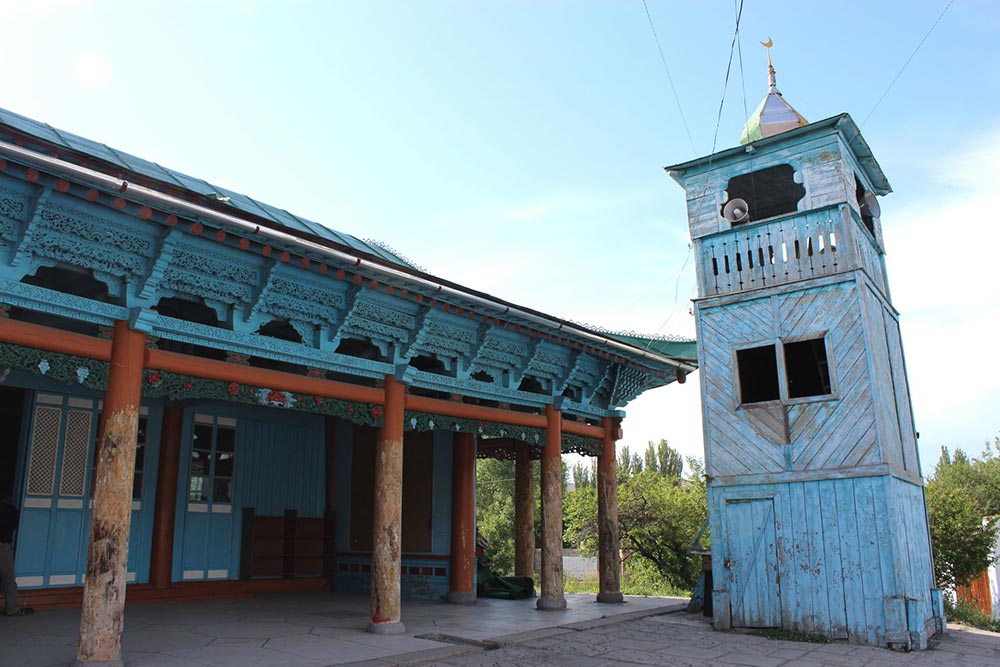
The Dungans: like the Uyghurs, the Dungans, who are Muslim, fled China to seek refuge in Kazakhstan and Kirghizistan.
Language
Kirghizistan uses Russian as its official language. Nevertheless, following its independence in September 1991, Kirghizistan adopted the Kyrgyz language as its national language.