The Manastchis, Storytellers of the Kyrgyz Epic
They carry within them centuries of history, traditions, and legends. The manastchis, storytellers of the Manas epic, keep alive, even today, Kyrgyz oral culture through their passionate recitations.
They carry within them centuries of history, traditions, and legends. The manastchis, storytellers of the Manas epic, keep alive, even today, Kyrgyz oral culture through their passionate recitations. Guardians of this rich and unique literature, they are also, for the Kyrgyz people, those who transmit from generation to generation a sense of patriotism, pride, and duty.
The Impressive Manas Epic
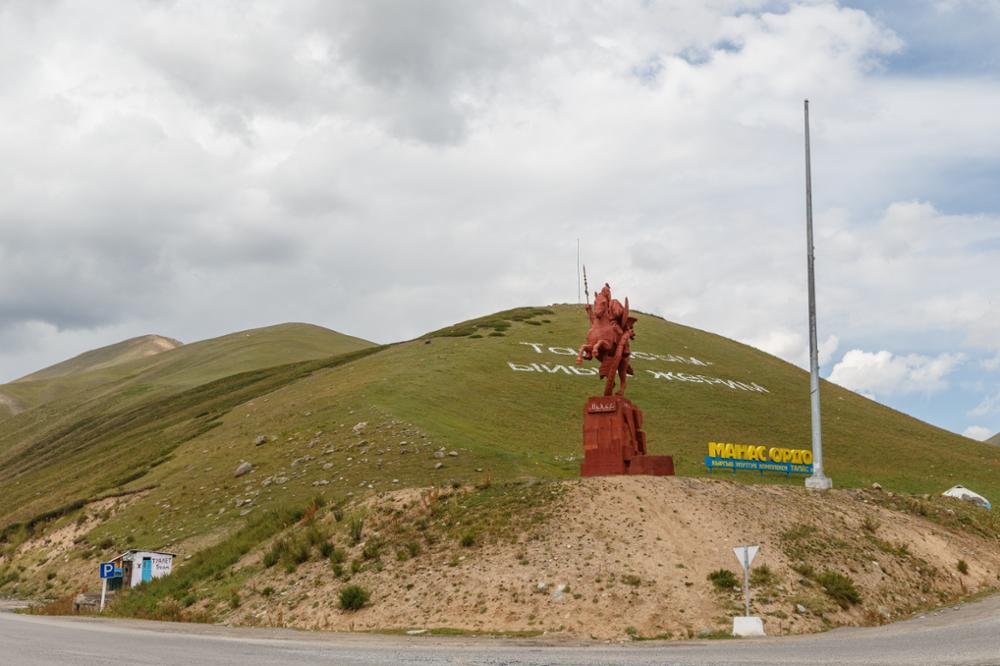
Inscribed on the UNESCO intangible cultural heritage list and in the Guinness Book of Records, the Manas epic is the longest epic in the world, surpassing the Odyssey and the Iliad combined. It recounts the exploits of Manas, great Kyrgyz hero, his son, Semetei, and his grandson, Seitek.
The epic tells the story of the creation of the Kyrgyz people, their struggle for existence, their unity and their strength. Manas says in it:
"Having gathered eagles, I transformed them into falcons.
Having gathered slaves, I transformed them into a people,
Thus, I created a united and powerful nation of wanderers."
Although historical facts are sometimes disputed, the epic is taught as truth in Kyrgyz schools. It brings together all the traditions of the people, which still live proudly today in the jailoos (pastures) of this beautiful country.
The Manas epic is an important political tool in Kyrgyzstan. A founding tale, an initiatory story, which has always united the Kyrgyz people, whether in the evening around a yurt, during political repressions or questions about the country's future. It is a source of pride for Kyrgyz people, who claim to be descendants of the great Manas, and gives them a strong, warrior, resilient identity. Indeed, Manas holds a very special place in Kyrgyzstan, with many buildings, streets, and mountain peaks bearing his name; and significant politicization.
The epic was written down only very recently, even though it has been recited for centuries (its origin has not yet been dated). Today, it still exists primarily through oral transmission rather than the written word, and it is its storytellers, the manastchis, who give it this inimitable charm.
Originally, the epic is said to have been merely a simple funeral song, composed at the death of Manas. It was the storytellers themselves who, inspired by the spirit of Manas, are believed to have added to the epic until it became the impressive text it is today.
Becoming a Manastchi
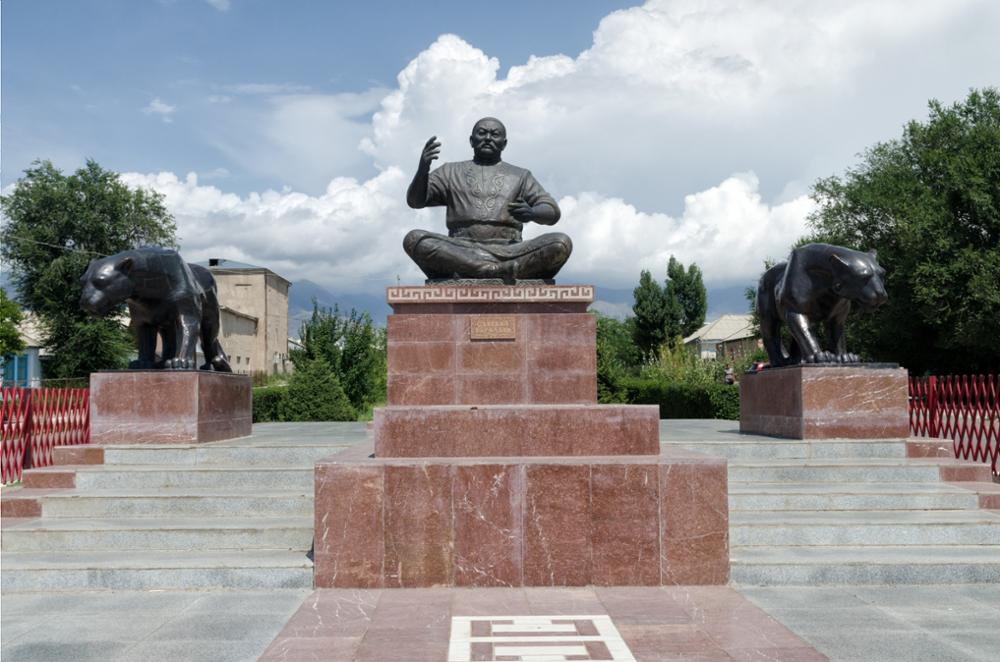
Sayakbaï Karalaev (1894-1971) is certainly the most renowned of all manastchis. Nicknamed the "Homer of the 20th Century," he was one of the rare individuals capable of reciting all three volumes of the Manas epic, and dedicating himself to the task for several months.
Not everyone is capable of memorizing such a lengthy text. And even fewer are able to bear the heavy weight of a story so important to the Kyrgyz people.
The vocation of the manastchi often arises from a vision or a dream. Subsequently, he dedicates his life to this historic task. This is what most storytellers recount, including the most respected modern manastchi, Nazarkyl Sedyrakmanov, who performs both in Kyrgyzstan and abroad. Born in Talas, the place where the mausoleum of Manas is located, he says he saw the great hero in a dream for the first time at the age of eight.
In fact, most manastchis recount that they never wanted to become storytellers, but that they were haunted by Manas and those close to him through numerous visions. It is also these dreams that allow manastchis to learn the work and to improvise, even before consulting texts. Many, moreover, never consult them.
To become a storyteller, one must believe in the story of Manas, disputed though it is, and work relentlessly. Above all, one must have a pure soul and not sin: manastchis believe in the power of Manas, capable of punishing them if they do not live as ordained.
Great masters have often refused to teach Manas, claiming that the epic is not learned but is born within oneself. One speaks then of genius, and of a gift offered by the spirit of Manas. Children learn texts of Manas in schools, and a school for manastchis had even been opened in 1999. However, it closed: the storytellers assert that while they can guide young Kyrgyz who have a calling to become manastchis, the learning cannot be institutionalized, nor accessible to all.
The manastchis include some women in their ranks as well, though this is rarer.
How to Tell Manas?
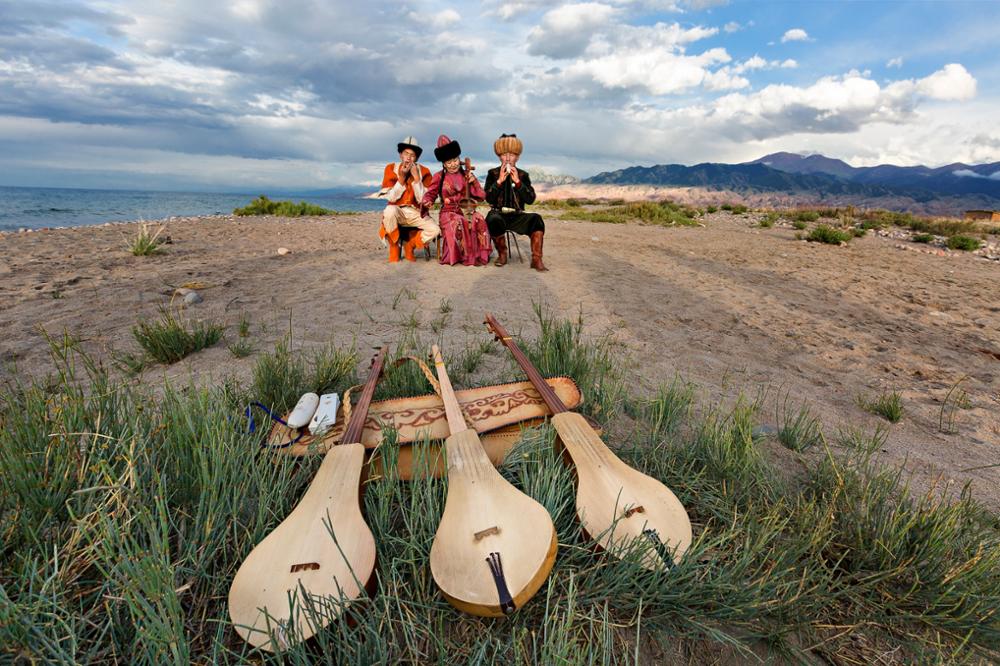
The manastchi takes the stage dressed in a kalpak, a traditional Kyrgyz felt hat, which represents the high mountain peaks of the country of the Heavenly Mountains. Before the recitation, he may call upon the soul of Manas or his ancestors for protection. It is a sacred moment, as the epic is to the eyes of Kyrgyz people.
He then recites an episode from the epic, often swept away by a trance. Indeed, for Kyrgyz people, Manas is not merely a beautiful tale, but a spiritual story, almost religious in nature, which has carried the Kyrgyz people from one valley to another for long centuries. The storyteller understands the sacredness of the epic; it is this aspect, it is said, that helps him memorize such lengthy texts.
The recitation takes the form of a quasi-song, rhythmic, moving, passionate, in which the manastchi almost loses control of his body. He feels the joy, sadness, anger, and pain of the hero whose story he is telling, and becomes one with him.
A performance absolutely worth seeing during your stay in Kyrgyzstan.
Frequently asked questions
Manastchi performances take place during cultural festivals, in cultural centers in Bishkek, and during special tourism events.
A complete recitation can last several months. Manastchis typically present selected episodes during public performances.
Yes, partial translations exist in English, though the complete experience requires hearing the oral version in Kyrgyz.