The yurt, a powerful symbol of Kyrgyzstan
Just as wine and cheese are to France, the yurt in Kyrgyzstan is a powerful symbol of the country's culture!
Just as wine and cheese are to France, the yurt in Kyrgyzstan is a powerful symbol of the country's culture ! While for English speakers, sleeping in a yurt is often called an unusual night, for Kyrgyz people, the yurt is an institution.
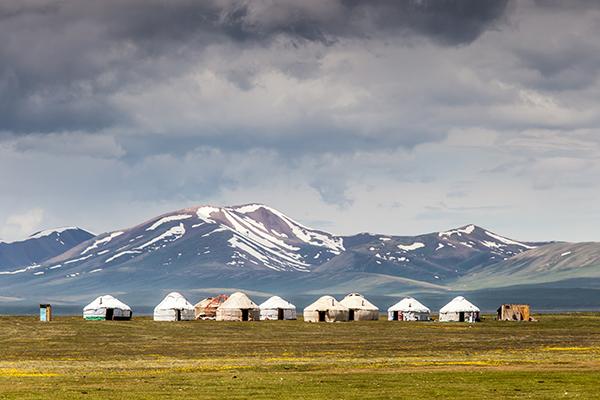
Though the Kyrgyz population have transitioned from nomadic to semi-nomadic status, yurts remain widely used—particularly during summer when herders drive their livestock into the lush mountain pastures or along the shores of lakes. Your journey through Kyrgyzstan will inevitably take you along the paths of these herders, where you'll witness the country's iconic landscapes: mountains, yurts, herds of yaks or sheep, and crystal-clear lakes.
Featured on the national flag (specifically the Tyunduk, the central part of the yurt's roof with its characteristic crossed perches within a wooden circle), the Kyrgyz yurt is also widely used during important celebrations: births, weddings, and funerals.
Discovering authentic Kyrgyz yurts
It's in Kyzyl-tuu, a small village on the shores of Lake Issyk-Kul, where you can discover the traditional craft of yurt-making. This village of 1,800 residents specializes in yurt fabrication and allows visitors to explore several workshops to better understand the structure of these distinctive dwellings and the real needs of Kyrgyz people.
The magnificent Lake Issyk-Kul and Lake Son-Kul are particularly popular with travelers, as here you can experience the authentic daily life of Kyrgyz herders. Several yurt camps are set up along the shores. Beautifully decorated in red—the color of protection and beauty—the yurts offer all the comfort needed for a picturesque night.
Your itinerary may lead you to spend the night with a local family. Here, there are no tourist camps, just the family's yurt and yours. It's the perfect opportunity to connect with the local people and fully immerse yourself in the semi-nomadic culture of Kyrgyzstan.
But what's the difference with the Mongolian yurt?
When people think of yurts, they often think of Mongolia—and for good reason! As the quintessential nomadic nation, Mongolia's yurt is equally symbolic and traditional. You'll see them everywhere there, even in the capital, standing alongside old Soviet buildings.
Yet the Kyrgyz yurt and the Mongolian yurt differ significantly:
Kyrgyzstan is a mountainous country with very cold winters. At high altitudes, snow is frequent, which explains their architecture with a steeper roof slope. Yurts are thus taller and more steeply pitched to prevent snow accumulation. The framework is lighter for easier transport through the mountains.
The Mongolian yurt, by contrast, has a more robust and heavier frame to withstand the violent winds that can bring sandstorms or blizzards. The roof slope is relatively gentle, so the yurt sits lower. It's supported by a central pole—something you won't find in the Kyrgyz yurt.
Frequently asked questions
Prices vary by accommodation type: from $15 for a family yurt with a local family to $50 at tourist camps by the lakes.
The ideal period runs from June to September, when herders set up their yurts in mountain summer pastures.
Contact a local specialized agency or visit villages near Issyk-Kul and Son-Kul lakes directly.
The Kyrgyz yurt is taller and more steeply pitched to shed snow, while the Mongolian yurt is lower and more robust to withstand steppe winds.