The Kyrgyz Horse
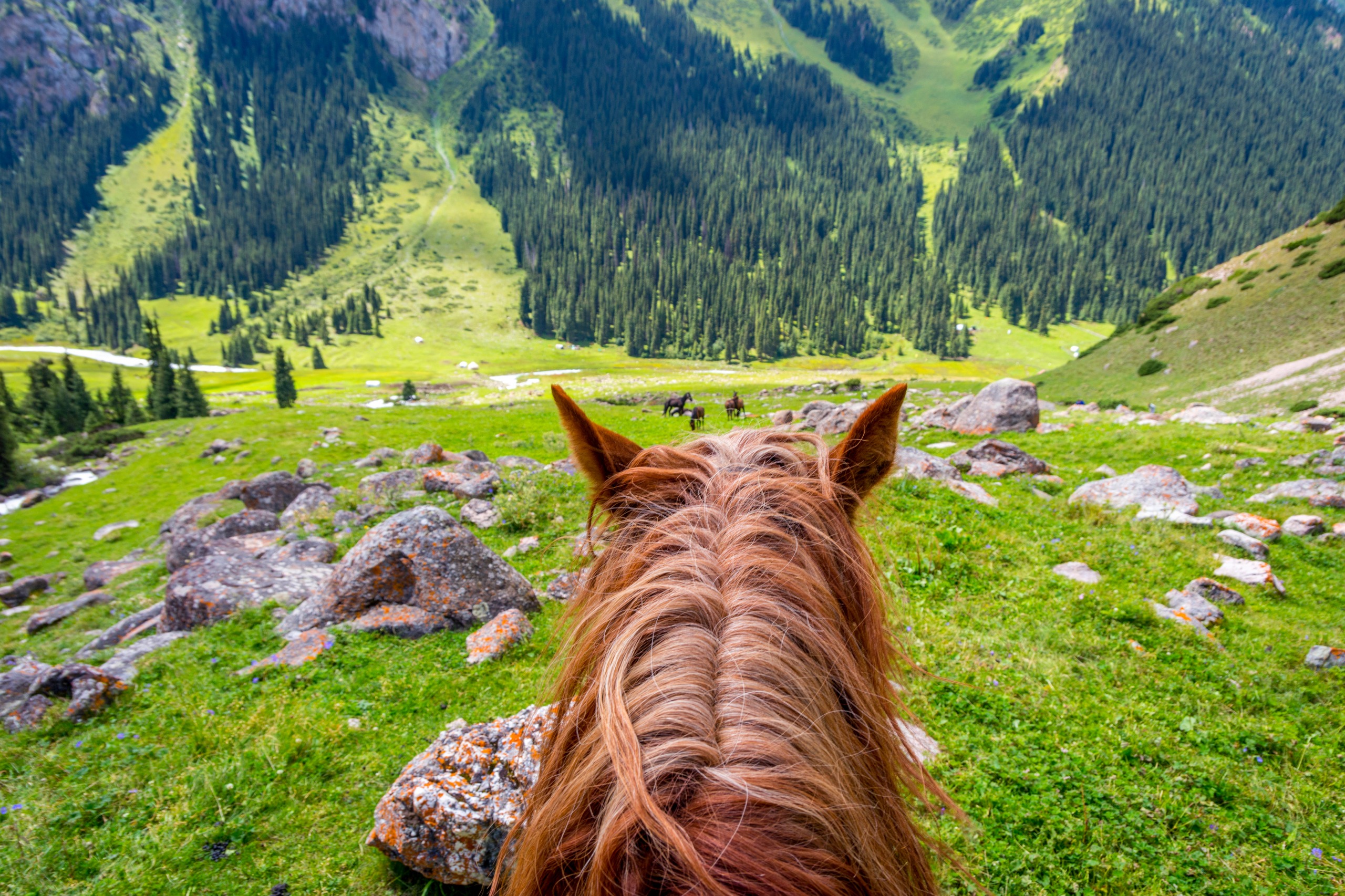
In Kyrgyzstan, as in Mongolia, the horse is an emblematic animal. An important animal for the local economy and identity, the vast majority of herders own one.
In Kyrgyzstan, as in Mongolia, the horse is an emblematic animal. An important animal for the local economy and identity, the vast majority of herders own one.
« Horses are the wings of the Kyrgyz ». This Kyrgyz saying sums up, in itself, the many qualities of the Kyrgyz horse. Indeed, hardiness, endurance and frugality are just some of the qualities of this Kyrgyz steed.
Description
The Kyrgyz is a saddle horse that measures between 1.34 and 1.64 meters and weighs around 450 kilograms. It is primarily used for pack and riding.
Origins and History
Kyrgyz horses result from a cross between Kyrgyz mares and pure Arabian stallions.
In Kyrgyzstan, the first national stud farm was established by KC Dimitriev in 1879. At its inception, it had only two Russian trotter-type stallions. But by 1896, the stud farm already had around forty mares of this type and of Kyrgyz breed.
Thirty years of selection and crossbreeding contributed to the improvement of Kyrgyz horses. Indeed, their height increased from 1.34 to 1.64 meters at the withers.
It was not until 1956 that the Kyrgyz was recognized as a breed in its own right. It is known as Novokyrgyz, and maintains an official registry.
Morphology
The head: rather short, profile slightly convex, small and mobile ears, small and very mobile eyes.
The neck: wide and well-muscled.
The chest: fairly wide and well-muscled.
The back: wide and flat, short and well-supported.
The ribs: long and well-arched, open chest, wide, deep and well-descended.
The croup: inclined, wide and well-muscled, oblique pelvis, open hip, tail set low.
The shoulder: short, straight.
The thigh: short and inclined, well-descended and muscled.
The limbs: strong, with dry tendons.
The hooves: dry, with hard and very solid horn.
Coat Colors
The coat colors of Kyrgyz horses are numerous and varied. But the most common are bay, chestnut, roan, dun, grey and isabelle.
Gaits
The Kyrgyz possesses four basic gaits: walk, amble, trot and gallop. These four gaits are balanced, active and straightforward. Indeed, its stride is not long, its step is short and the swing of its neck is pronounced. Hence its great ease in rough terrain and in medium and high mountain.
Habitat and Breeding
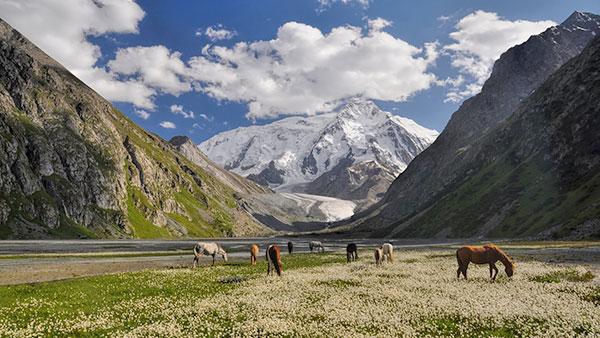
During warm seasons, horses are generally kept outdoors. They are tethered to pastures to prevent them from straying far. During the cold season, most are kept in semi-stabling while others remain in free grazing.
In accordance with equestrian culture in Kyrgyzstan, horses are treated very well. To care for them, Kyrgyz people use both traditional and modern methods.
Uses
For the Kyrgyz, the horse is first and foremost a transport animal. It allows them to cover great distances in a short time. It was also used under saddle and pack and facilitated the conquest of new territories and the expansion of their domain. The horse is also employed in agricultural work and for the transport of grain. It is an unfailing companion to the hunter, and the success of this activity depends on its presence.
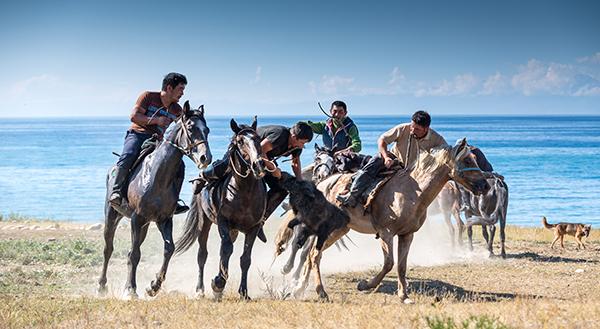
Today, the Kyrgyz horse is still used for certain tasks and for transport. Kyrgyz who enjoy riding use it for horse races and certain national games such as buzkashi.
Frequently asked questions
The Kyrgyz horse measures between 1.34 and 1.64 meters at the withers and weighs approximately 450 kilograms. It is a robust saddle horse, adapted to mountainous terrain.
Kyrgyz horses result from crosses between local Kyrgyz mares and pure Arabian stallions. The breed was officially recognized in 1956 under the name Novokyrgyz, following thirty years of selection that began with the establishment of the first national stud farm in 1879.
The horse remains a central animal in Kyrgyzstan: it is used for transport, agricultural work, but also for leisure and traditional games such as buzkashi. Horse racing is also very popular in local culture.
Yes, Kyrgyzstan is an ideal destination for equestrian treks. Kyrgyz horses, renowned for their endurance and ease in mountainous terrain, allow you to explore the steppes and mountains of the country in an authentic way, often by staying in yurts.
Buzkashi is a traditional equestrian game of Central Asia practiced in Kyrgyzstan. Riders compete to seize the carcass of an animal and place it in a target zone. This spectacular game testifies to the exceptional horsemanship skills of the Kyrgyz people.