Kirghizistan's Iconic Animals
Dreaming of vast open spaces and unforgettable experiences far from urban chaos? Kirghizistan is the destination that will fulfill your every craving for adventure and discovery!
Dreaming of vast open spaces and unforgettable experiences far from urban chaos? Kirghizistan is the destination that will fulfill your every craving for adventure and discovery! This country offers countless attractions to quench your thirst for adventure and nature. As you may have noticed on our site, Kirghizistan is beginning to captivate visitors with its breathtaking landscapes and the nomadic way of life of its peoples. But you may not know that Kirghizistan is also home to a fauna unique in the world that you might be able to observe during your stay!
Pallas's Cat
Pallas's Cat (Otocolobus manul) or Manul is a rare species and one of the cutest animals in the world. This magnificent specimen resembles a domestic cat, but appears larger due to its fur, making it look like a fluffy plush toy. Perfectly adapted to the harsh Kirghiz climate, these felines thrive in rocky areas and mountain ravines, far from any human activity, making them difficult to observe.
Marco Polo Argali
 The Marco Polo Argali or Ovis Ammon Polii were named in honor of Marco Polo, the first explorer of Central Asia. It is a remarkable animal with horns that diverge on each side of the head, forming a double spiral. The length of its horns can reach up to 1.40 meters from tip to tip. Argalis occupy different mountainous zones across Central Asia, generally isolated from one another. In Kirghizistan, they are found in the heights of the Pamir and the Tien Shan mountains.
The Great Jerboa
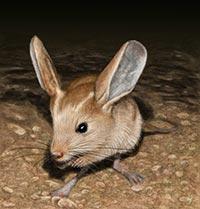 With a name like that, you might imagine it to be a large and ferocious creature. In reality, it is a small desert rodent found throughout the Central Asian steppes. Great Jerboas can run up to 24 km/h when pursued by a predator. They live up to 6 years and enter hibernation from the first autumn frost until early spring.
Stone Marten
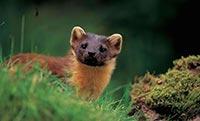 The stone marten is a very rare species found only in Central Asia. Extremely discreet, they are very difficult to observe in their natural habitat. It is a small mammal measuring 40 cm in length with a height of approximately 15 cm. It resembles the beech marten somewhat, but larger. It weighs on average 1.2 kg, but can reach up to 1.8 kg. Although they are nocturnal animals, you may encounter a few during summer hikes.
Snow Leopards
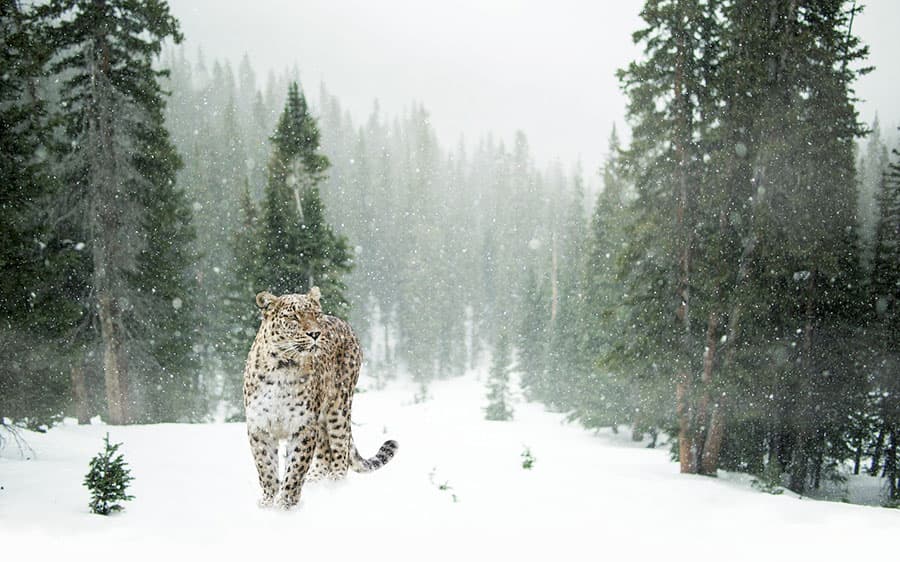
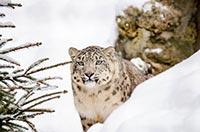 The snow leopard is one of the iconic animals of Kirghizistan. It is undoubtedly the most elusive and one of the most charismatic of the great cats. It possesses a beautiful long, thick coat ranging in color from light gray to cream-gray, with dark spots that are more or less circular. Fabulously adapted to its environment, this animal's fur has a hue that allows it to blend into rocky, snow-covered habitat. Of course, this is merely a taste of what awaits you in Kirghizistan. Indeed, a stay in this country will be an opportunity for you to discover more than 150 species such as wild boars, brown bears, and golden eagles, to name just a few.
Frequently asked questions
Kirghizistan is home to several iconic animals including the snow leopard, Marco Polo argali, Pallas's cat (Manul), stone marten, and great jerboa. The country has more than 150 wild species, including brown bears and golden eagles.
The snow leopard is present in Kirghizistan but is extremely difficult to observe due to its elusive nature and solitary lifestyle in high mountains. Specialized outings with experienced local guides increase observation chances, particularly in remote areas of the Tien Shan.
Summer (June to September) is generally the best period to observe Kirghiz wildlife. Animals are more active, climatic conditions allow access to remote mountain areas, and certain nocturnal species like the stone marten may be spotted during hikes.
Pallas's cat is a rare species classified as 'near threatened' by the IUCN. In Kirghizistan, it lives in rocky areas and mountain ravines, far from human activities. Its dense fur and discreet lifestyle make it very difficult to observe, which contributes to its relative protection.
The Marco Polo argali (Ovis Ammon Polii) is a large wild sheep from Central Asia whose horns can reach 1.40 meters from tip to tip. It takes its name from explorer Marco Polo, who was the first to describe it. In Kirghizistan, it is found primarily in the heights of the Pamir and Tien Shan.