Karakol
Karakol
Nestled against the Tian Shan, Karakol blends a Chinese mosque, a wooden Russian cathedral, and direct access to Kyrgyzstan's most stunning treks.
Karakol is the fourth largest city in Kyrgyzstan and lies to the east of Issyk-Kul Lake. As the administrative capital of the Issyk-Kul province, Karakol has become the most renowned destination for travelers thanks to its breathtaking natural setting.
A Brief History
In 1888, the city was renamed Przhevalsk in honor of the Russian explorer Nicholay Przhevalsky, who had died in this country. In 1921, the city reclaimed its original name following local protests. However, it was renamed Przhevalsk again in 1939 on Stalin's orders to celebrate the centenary of the explorer's birth. Przhevalsk was once more changed to Karakol after the collapse of the Soviet Union in 1991. Today, the town has become the seat of provincial administration.
Karakol Today
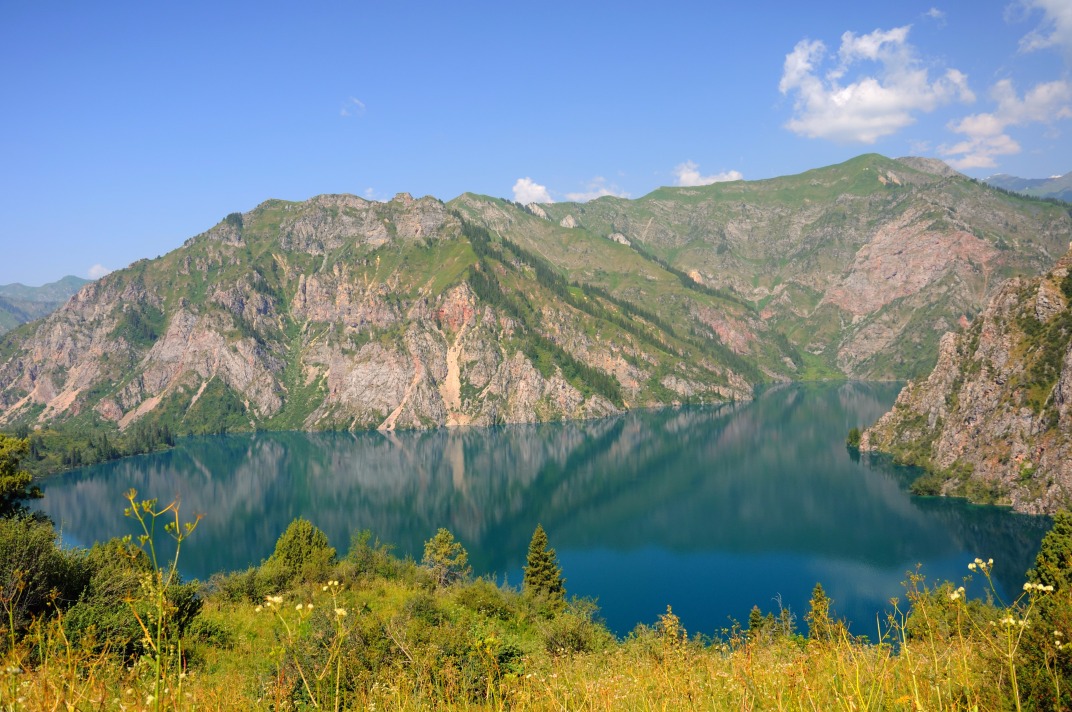
Karakol and its region offer numerous advantages to captivate visitors. Its proximity to Issyk-Kul Lake and the magnificent Altyn Arashan valley make it a perfect starting or ending point for excursions into the surrounding mountains.
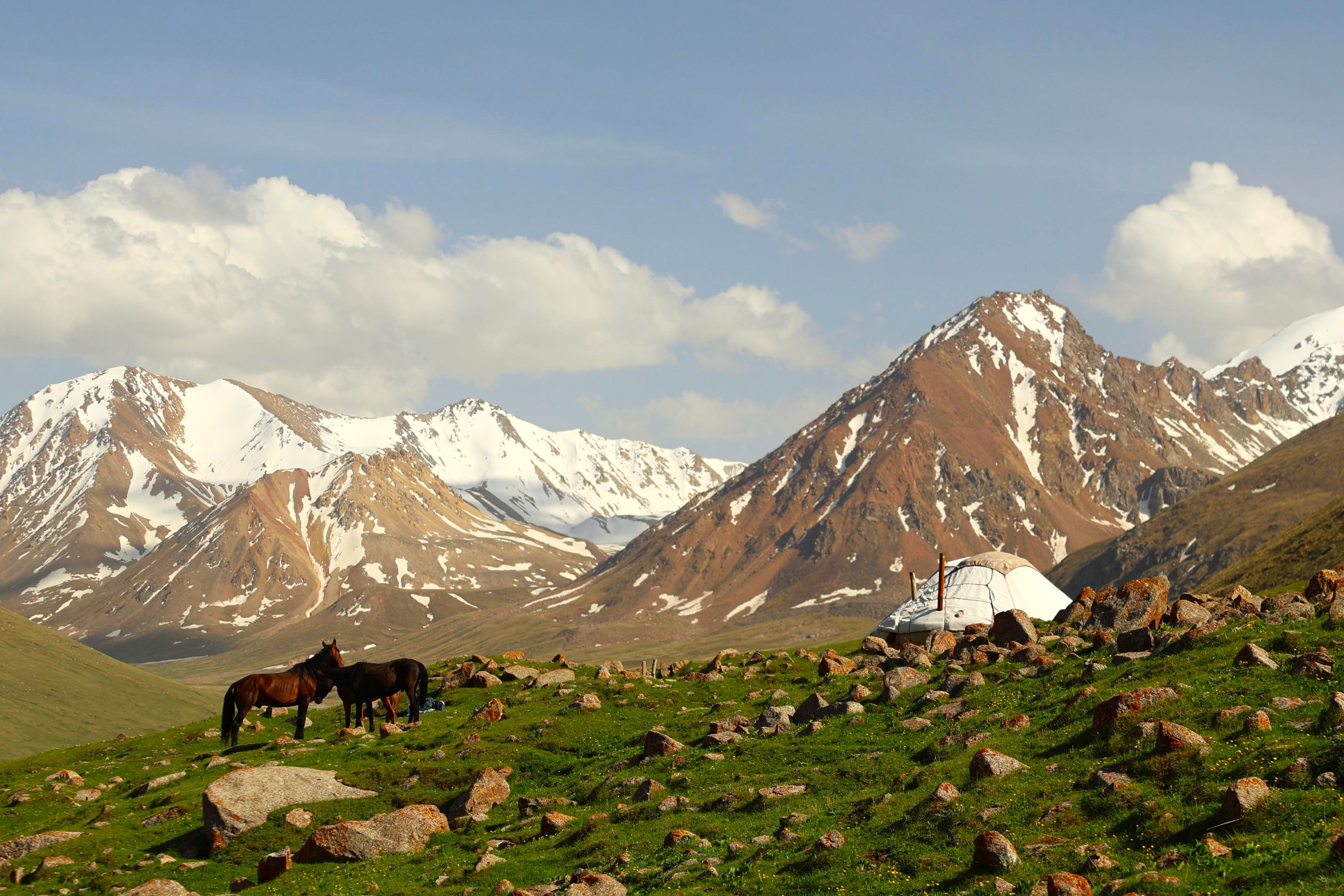
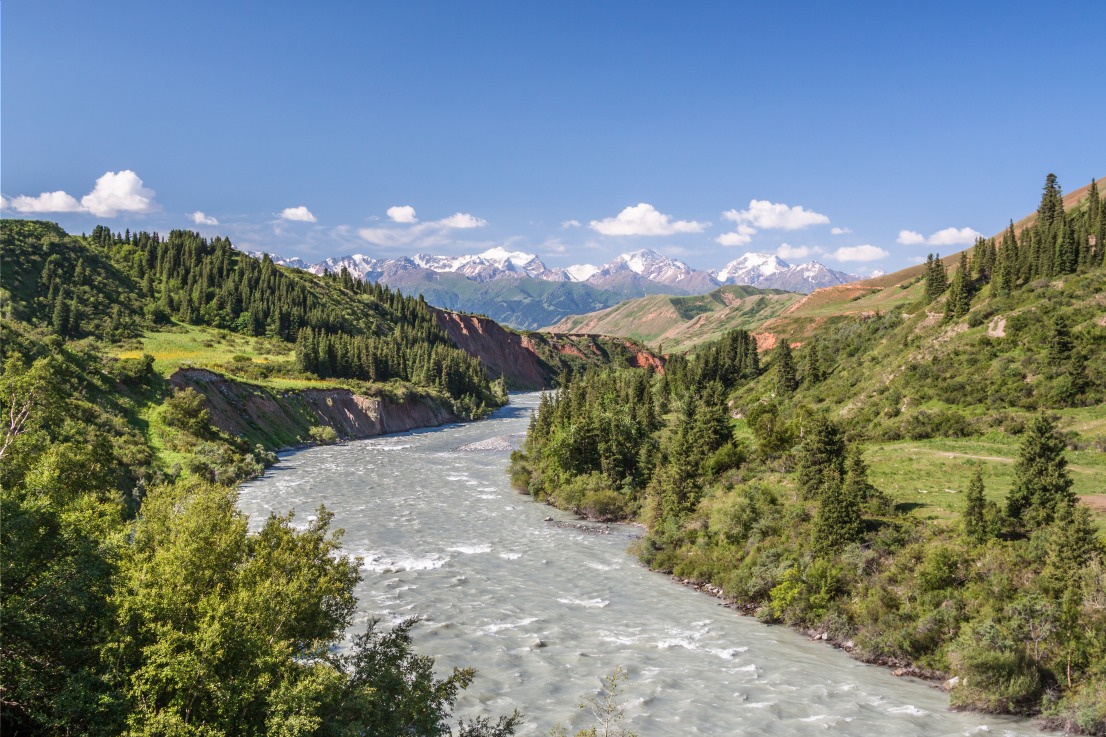
Indeed, Karakol boasts being situated in a particularly natural region, formed by lakes and mountains with snow-capped peaks. Many hiking trails allow travelers to explore the region on foot or horseback.
The town itself promises a pleasant stopover and invites you to discover a few sites bearing witness to its history under Soviet occupation. You can then use this pause to visit Przhevalsky's tomb. A little further on stands the commemorative park and small museum dedicated to Nicholay Przhevalsky's explorations. At the entrance, you'll see the old Soviet torpedo testing facilities.
A refuge for the Dungan community—descendants of the Hui people who migrated from northwestern China to the region in the 1870s—you can discover the Dungan mosque with its Chinese architecture. Its vibrant colors and various paintings depicting different mystical animals make it a truly original mosque.
The Russian Orthodox cathedral (called the Church of the Holy Trinity) built entirely in wood with its emerald green roofs in the town center will not leave you unmoved. Constructed in 1894–1895, it was built according to the principles of ancient six-pillar church construction but contains only four pillars. The church preserves the miraculous icon of Tikhvin of the Mother of God created 116 years ago in Athens, as well as the relics of martyrs. You can enter and admire the bell tower, its sculptures, and paintings.
If you stop in Karakol on a Sunday, take the opportunity to visit the animal market—it's well worth the detour.
You can take a minibus to reach Karakol. The journey takes approximately six hours from Bishkek.
Accommodation in Karakol
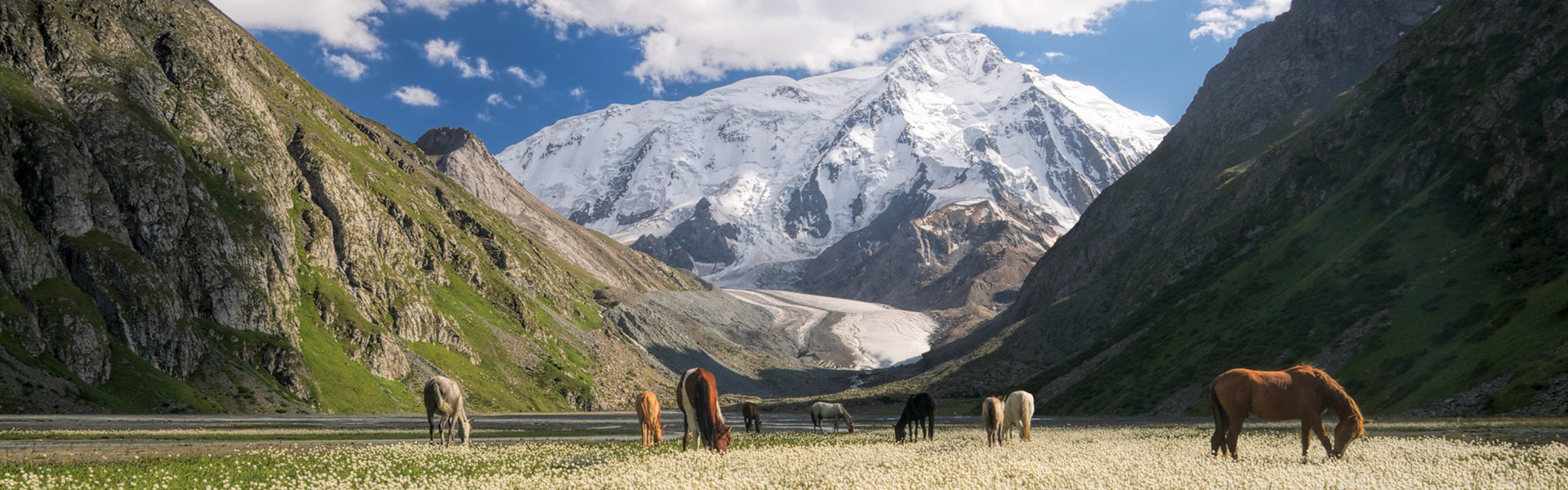
Chez Zina : Notre maison d’hôtes à Karakol
Maison d'hôtes dungane tenue par Zina à Karakol : architecture traditionnelle, table familiale en plusieurs plats et immersion dans une culture méconnue du Kirghizistan.
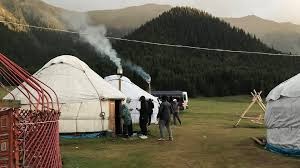
Golden Yurt : Camp de yourtes à Jeti
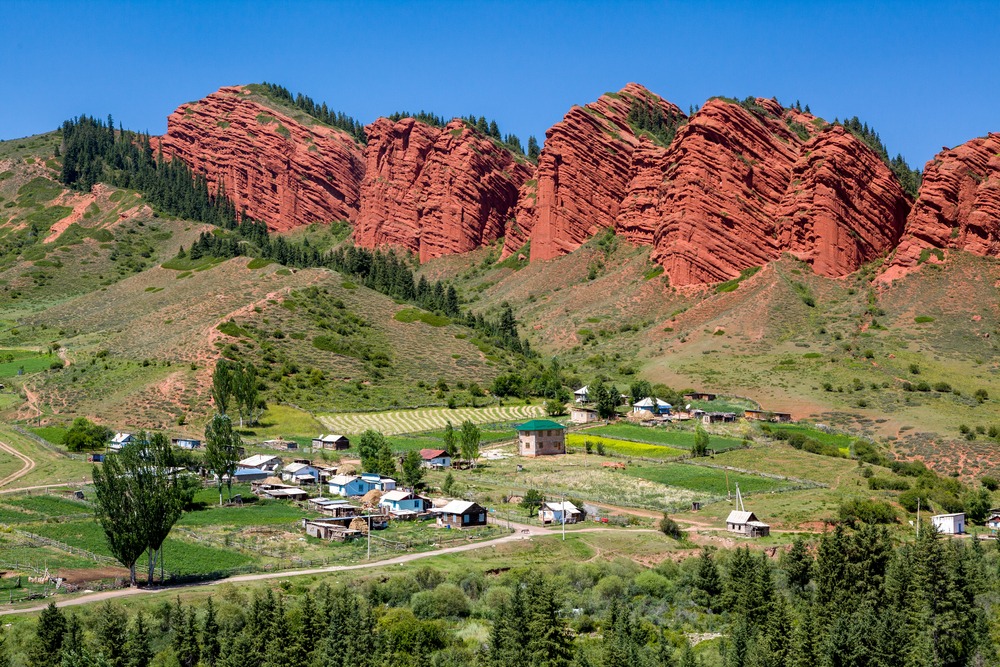
Camp de 12 yourtes kirghizes installé dans le jailoo de Kok-Jayik, au-dessus des falaises rouges de Jeti-Oguz, près de Karakol. Base de trek vers le lac Ala-Kul.
Also discover
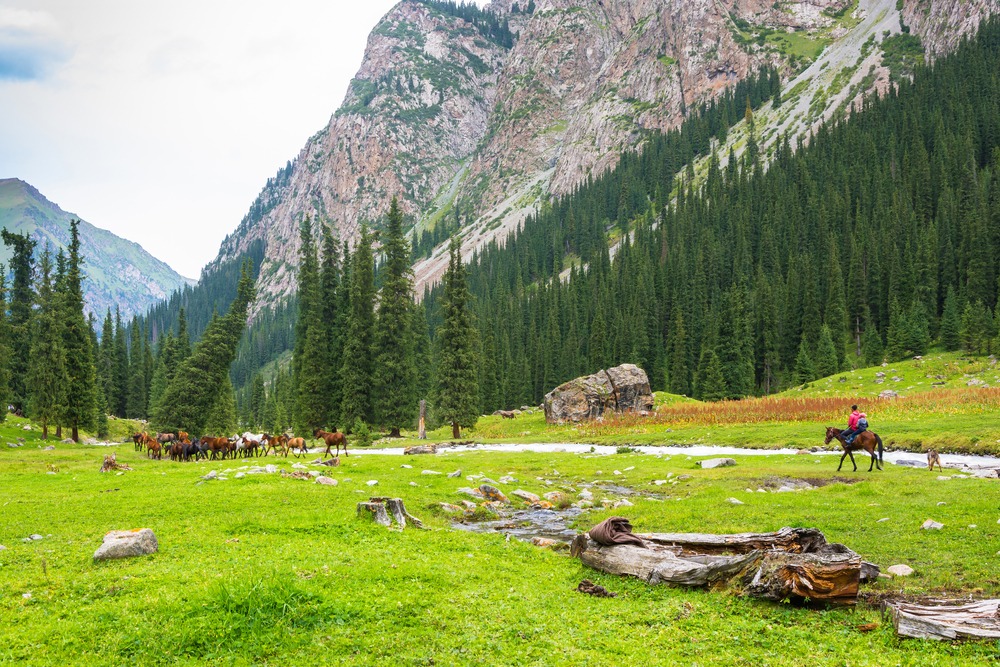
The Karkara Valley
In eastern Kyrgyzstan, Karkara Valley unfolds its alpine meadows, nomadic camps and river-frontier at the foot of the Tian Shan.
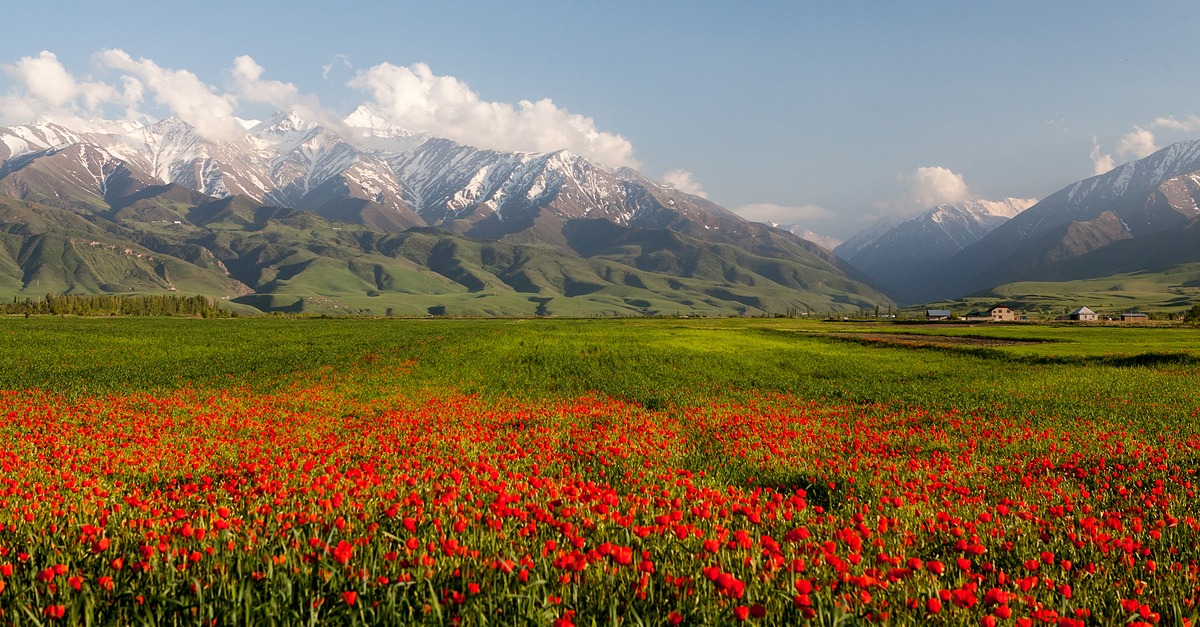
The Flower Valley of Kok Zhaiyk
At 2,800 m elevation near Jeti-Oguz, the Kok Zhaiyk valley blooms with red poppies each spring. A hidden jailoo of Kyrgyzstan.
Want to discover this destination?
Our local advisors design your tailor-made trip.