Chon-Tuz Salt Mines
Forty kilometers from Kochkor, the Chon-Tuz salt mines reveal galleries with rose and ochre walls, centuries-old artisanal extraction, and a rare mineral landscape in the foothills of the Tian Shan.
About forty kilometers from Kochkor, in the foothills of the Tian Shan, the Chon-Tuz salt mines open within a rock salt cliff tinged with ochre and rose hues. This natural and artisanal industrial site, rarely visited by mainstream tour circuits, attracts travelers curious about geology and rural Kyrgyz economics. Extraction is still practiced in traditional fashion by local communities.
What you'll see
The mine walls reveal colored salt veins — white, pink, gray — sculpted by erosion and manual extraction. Outside, blocks of raw salt are stacked near gallery entrances. The surrounding landscape, arid and rolling, contrasts with the high-altitude meadows visible in the distance. Salt crystals scatter across the ground around the site.
History and context
The salt of Chon-Tuz (literally "great salt" in Kyrgyz) has been exploited for centuries by nomadic and settled peoples of the region. It was a precious commercial resource on caravan routes linking the Kochkor valley to steppe markets. Exploitation remains artisanal today, locally managed, without heavy industrialization.
Highlights of your visit
The galleries and colored walls
Inside the accessible galleries, strata of salt display varied colors. Natural light or a torch reveals unusual crystalline textures. Stay in marked areas: some galleries are unstable.
Artisanal extraction
Depending on the season and activity level, it's possible to observe local workers extracting salt using simple tools. This is a rare window into a rural economic practice that is becoming increasingly scarce.
The mineral landscape around you
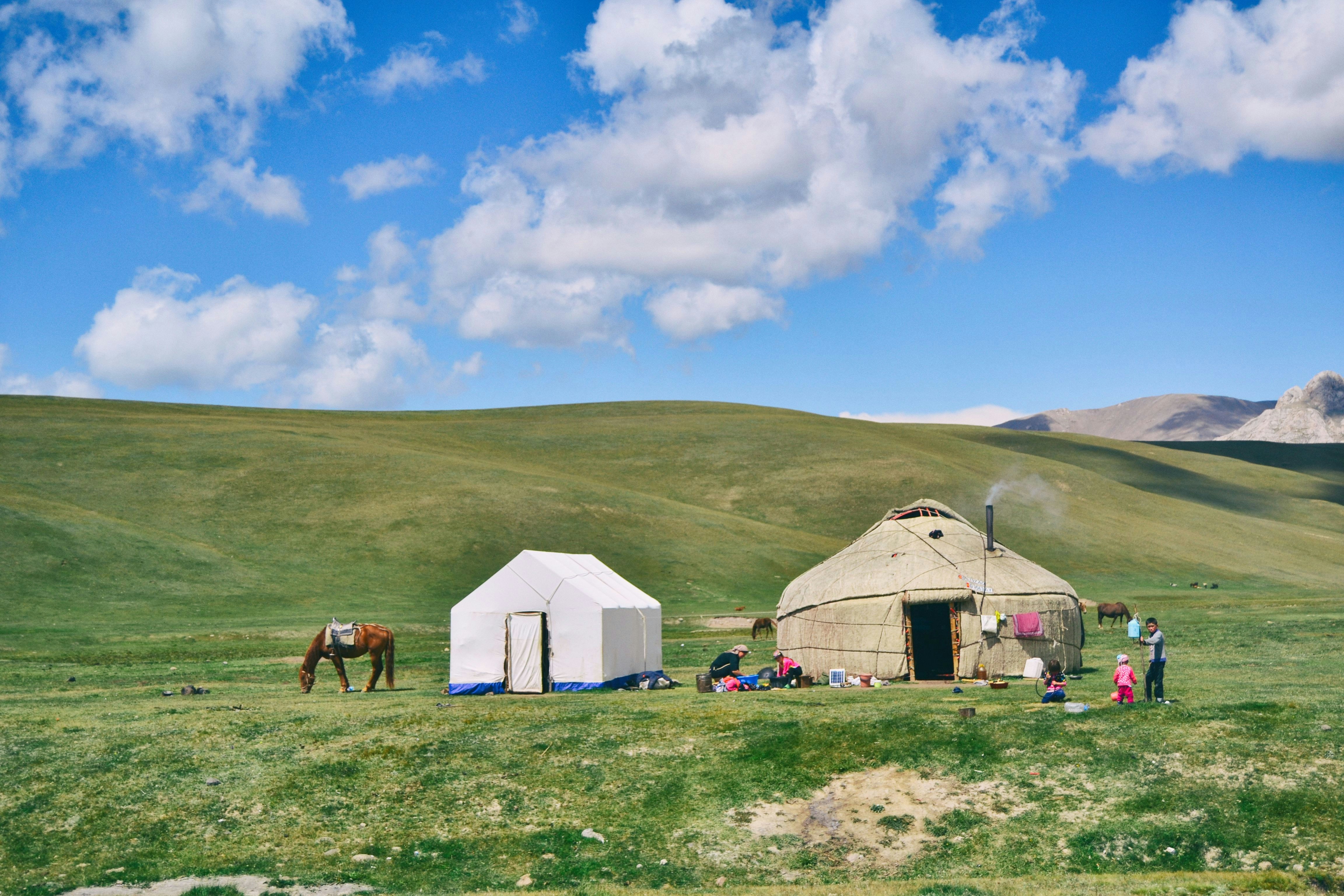
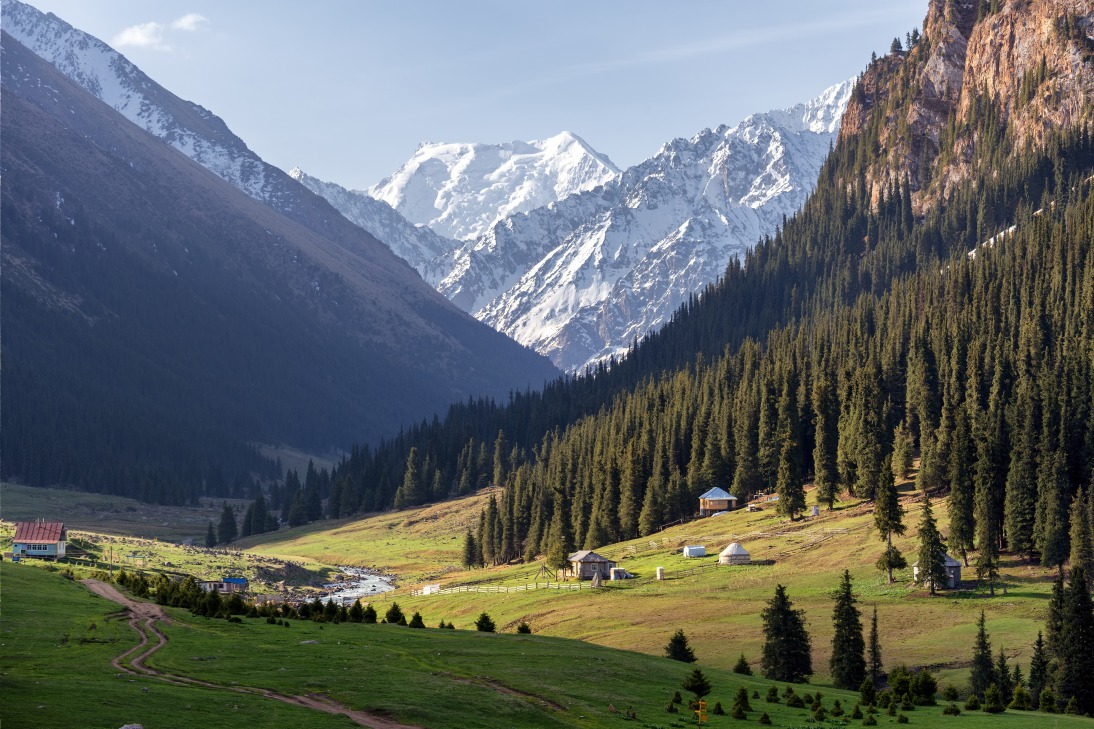
The site's surroundings offer a panorama of eroded hills in warm tones, typical of the semi-arid zones of the inner Tian Shan. Late-afternoon light accentuates the color contrasts.
Photography tips
Raking light at dawn or late afternoon enhances the pinkish and ochre tones of the walls. Inside the galleries, a portable torch significantly improves shots. Avoid direct flash on crystals: it overexposes reflections. Photograph the stacked salt blocks outside to give human scale to the site.
Location and access
The site is located in Naryn Region, approximately forty kilometers from Kochkor. The access track requires a four-wheel-drive vehicle or good ground clearance, especially after rain. From Kochkor, allow about an hour of travel. No regular public transport serves the site: a local taxi or vehicle arranged through a Kochkor agency or guesthouse is essential. The site is not equipped for people with reduced mobility.
Nearby attractions
- Song-Köl Lake — high-altitude lake above 3,000 m, accessible from Kochkor, the heart of summer nomadic life.
- Village of Kochkor — the region's logistical hub, known for its felt cooperatives and community-run guesthouses.
- Dolon Pass — mountain passage on the route to Song-Köl, with open views of the Tian Shan ridges.
Frequently asked questions
From June to September, the access track is passable and weather conditions are stable. Outside this period, snow or mud may make access difficult or impossible.
A local guide or driver familiar with the track is highly recommended. The site is not marked for independent visitors, and the track can be difficult to locate without local landmarks.
Yes, both sites are accessible from Kochkor. Some travelers visit Chon-Tuz in the morning before heading to Song-Köl in the afternoon, depending on the itinerary arranged with their driver.
Closed-toe shoes with sturdy soles are essential — the ground is uneven and slippery in places. A light jacket is useful even in summer, as the site is exposed to wind.
No restrictions are known for photography. Bring a torch to illuminate the interior of the galleries, essential for sharp images.

Interested in this visit?
We can include it in your personalised itinerary.