Kyrgyzstan's Most Beautiful Sites Told Through Legend
What better way to grasp the poetry of the Kyrgyz people than through their legends? We invite you to rediscover some of Kyrgyzstan's most iconic locations through the myths that bring them to life.
What better way to grasp the poetry of the Kyrgyz people than through their legends? We invite you to rediscover some of Kyrgyzstan's most iconic locations through the myths that bring them to life. Remember these stories when you visit these places, filled with myth and mystery.
Burana Tower, Protector of a Princess
Located in the Chuy region on the road between Bishkek and Lake Issyk Kul, the Burana site is a must-visit destination to soak in Kyrgyzstan's history and its peoples. The 25-meter tower originally stood at 45 meters when it was built between the 10th and 11th centuries. Today it is inscribed on the UNESCO World Heritage List. While history books describe it as a minaret and sacred place in one of the key cities of the Karakhan empire, Kyrgyz folklore tells a different story.
Legend has it that a powerful king built this towering structure to protect his only daughter. A prophet had predicted her death at age 15—she would perish from the bite of a spider. Terrified at the thought of losing his precious daughter, the father constructed this tower where the young girl spent her entire life sheltered from all danger. When she turned 15, the king was so relieved to find her still alive that he brought her a basket of apples—but inside lurked a Black Widow spider. It bit the maiden, and that was her final day. The king, consumed by inconsolable grief, wept atop the tower's heights, which partially destroyed it—explaining why it stands at its reduced height today.
Koshoy Korgon: Infidelity and Defeat
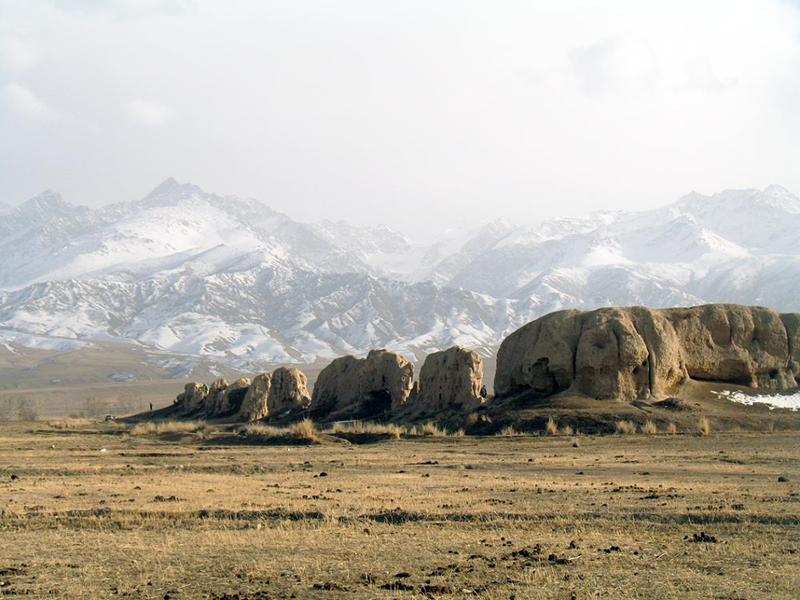
Near the village of At-Bashy in central Kyrgyzstan, heading toward Tash Rabat, you can stop to explore the little-known ruins of the Koshoy Korgon fortress, built entirely of clay. Once a key location on the Silk Road, today only its foundations remain.
Legend credits the fortress's construction to the hero of the same name, Koshoy. A disciple of the great Manas, Koshoy used the fortress to protect the Kyrgyz tribe from Chinese and Mongol invasions. He is depicted in numerous paintings seeking counsel from an eagle, which represents the soul of the fire Manas according to Kyrgyz tradition. A great warrior and strategist, Koshoy successfully protected his people living within the fortress's walls for 29 years. Until one fateful night, when his wife fell for a Chinese general and opened the citadel's gates to enemy troops.
The Broken Heart and the Seven Bulls of Jety-Oguz
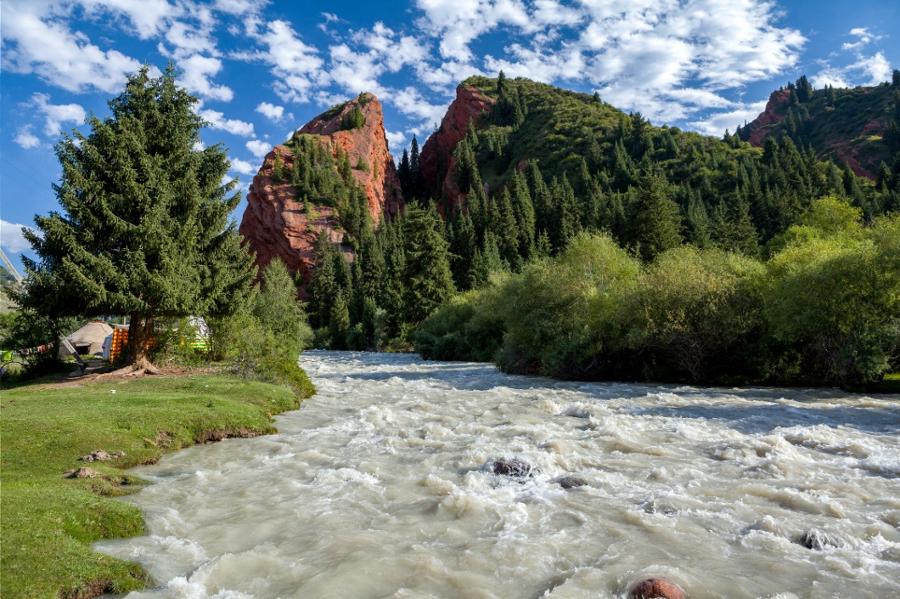
A picturesque valley located east of Lake Issyk Kul, near the city of Karakol, Jety-Oguz captivates with its vivid red rocks and cliffs set between towering peaks and dense forests. Upon entering the valley, you first spot an enormous rock shaped like a broken heart. On the other side, seven tall rocks stand side by side, equally impressive. Nomadic peoples have several legends to explain these natural wonders.
The most widespread tells of a tragic love dispute between two kings. One day, one Khan fell deeply in love with the wife of the second. He abducted her and loved her, which soon sparked conflict between the two clans. Tension in the region rose steadily with each battle. Both kings genuinely loved the young woman, and neither was willing to lose her.
Then the king who had abducted her conceived a plan to end the war. He would have to kill the coveted beauty and return her body to his enemy, hoping to satisfy him without seeing his beloved in another man's arms.
He organized a great feast in the valley and, for the occasion, sacrificed seven bulls. When his subjects killed the last bull, he plunged a knife into the young woman's heart. From her wound gushed torrents of blood that poisoned everyone present.
According to another legend, the formation of the seven rocks—the seven bulls from which the valley takes its name—actually stems from an inheritance dispute. An aging herder, knowing he was dying, wanted to divide his seven bulls among his three sons. But they quarreled and could not reach an agreement. The father, enraged by his sons' behavior, struck his fist upon the earth and transformed the bulls into rocks, so no one would be favored.
The broken heart is, according to an alternative legend, that of a young Kyrgyz woman named Jyldyz. Jyldyz in the Kyrgyz language means "beauty,