Nowruz, Kyrgyzstan's New Year
In Kyrgyzstan, New Year follows the lunar calendar, perpetuating an ancestral tradition shared across Asia.
Like most Asian countries, the new year is celebrated according to the lunar calendar, as it would be in Mongolia or China. But unlike these two countries, Kyrgyzstan celebrates every March 21 "Nowruz", marking the first day of spring (literally: "New Day"). Originally linked to Zoroastrianism (religion of the Persian empire), this national festival of more than 3,000 years is today celebrated in countries of Persian influence—Iran, Iraq, Afghanistan—and notably in former Soviet republics such as the 'Stans. So if you happen to be visiting during this time of year, beyond enjoying the beautiful ski slopes of Karakol, Nowruz becomes the must-see experience not to miss.
Activities During Nowruz
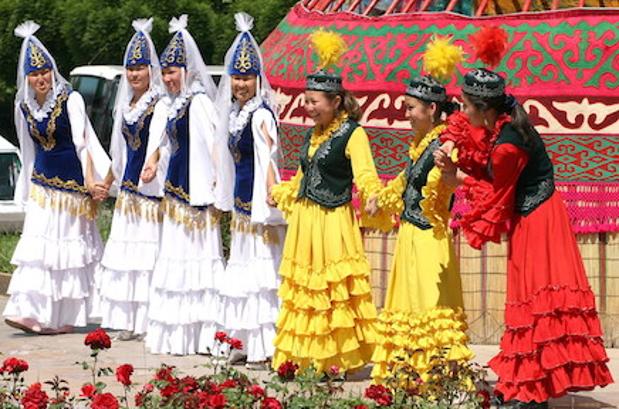
In Bishkek, numerous festivities are organized for the occasion to introduce you to Kyrgyz culture. At the hippodrome, many competitions take place, the most famous being Buzkashi, which attracts large crowds of locals eager to witness this ancient sport. It consists of mounted riders attempting to seize the carcass of a sheep (40 to 50kg) from opposing team cavalrymen. An experience that might unsettle some, but it's certainly worth witnessing. Indeed! The French rugby team will have nothing to envy the All Blacks. If you decide to skip it, we won't hold it against you—there's something for everyone: horse races, wrestling, traditional games, dances, songs, and culinary delights as well. However, the grandest festivities unfold in the heart of the city, more precisely on Ala-Too Square. Here, crowds converge, colors dazzle, scents enchant, and music fills the air. Among balloons, cotton candy, decorative banners, and costumes, this colorful festival unites young and old alike. On the central stage, erected for the occasion, young women don traditional clothing, performing the so-called "Flower Dance," rhythmed to the musical notes of the "komuz," a small traditional Kyrgyz guitar.
If you feel peckish, treat yourself to shashlyk, spiced meat skewers, or venture into sumolok, a wheat-based beverage. Perhaps less appetizing to your palate, but that's precisely why it's only prepared once a year. As evening falls, modernity takes center stage, with pop stars arriving to energize Bishkek's youth. Beyond the central square, festivities continue with good cheer all around.
At Home with Locals
At home, it's a moment of great conviviality. Family, neighbors, and friends visit, and as a welcome, a grand dessert table displays seven traditional dishes: sharob (wine), shir (milk), shirinliklar (sweets), shakar (sugar), sharbat (sweet beverage), sham (a candle), and shona (a sprout). These represent purity, abundance, joy, and fertility for the year to come. You will typically be offered a cup of black tea and dishes made with meat, rice, and vegetables, prepared according to local ingredients. Flavors one might describe as Oriental, with their aromatic spices. Traditionally, Nowruz was also an occasion to exchange gifts—a custom that has somewhat faded but still survives in certain families. Nevertheless, it's not uncommon for children to receive toys for the occasion. A celebration for the little ones, so to speak. Well, all that's left is to wish you a joyful Nowruz, and we look forward to welcoming you soon!
Frequently asked questions
Nowruz is celebrated every year on March 21 in Kyrgyzstan, marking the first day of spring and the traditional new year.
The main festivities take place on Ala-Too Square in the city center and at the hippodrome for traditional equestrian competitions.
Traditional dishes include shashlyk (spiced skewers), sumolok (wheat beverage), and seven symbolic dishes representing prosperity.
Yes, Nowruz festivities are open to the public and provide an excellent opportunity to experience authentic Kyrgyz culture.