Everything About Przewalski's Horse
Perhaps one of the most renowned animal species in the world: Przewalski's horse has been the subject of numerous studies and rehabilitation programs.
Perhaps one of the most renowned animal species in the world: Przewalski's horse has been the subject of numerous studies and rehabilitation programs. These small horses, originating notably from Mongolia, were long considered the last wild horses on our planet.
A wild horse?
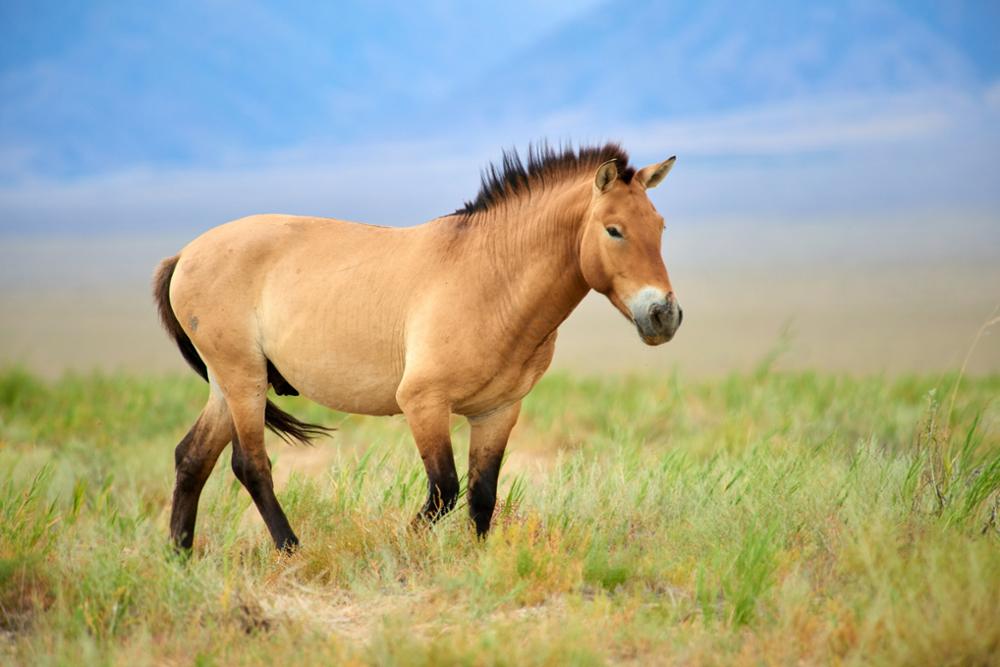
Russian explorer Nikolai Przhevalsky discovered this small wild horse in the mountains near the Gobi Desert in Mongolia, in 1879. From that point on, the horse, named in honor of Przhevalsky, became known worldwide as the last wild horse. Indeed, all species we know today have been domesticated and bred in captivity.
However, in 2018, a scientific study revolutionized this image of Przhevalsky's horse: DNA tests confirmed that Przewalski's horse actually descended from the first domesticated horse, tamed 5,500 years ago by the Botai in northern Kazakhstan. Przewalski's horse would thus have returned to the wild after domestication.
That said, interest in this horse has not diminished since this discovery, as Przewalski's horse remains the oldest species of horse living in the wild state. Moreover, this horse closely resembles the paintings found in the Paleolithic caves of France.
Standing 1.30 meters tall, with its imposing white muzzle and winter coat, Przewalski's horse differs from other domesticated species; it is in fact closer to the zebra.
An Endangered Species
Following Nikolai Przhevalsky's discovery, breeders and hunters rushed to Mongolia and China, where herds of wild horses roamed. Until then, it was believed that no entirely wild horses existed: this news therefore quickly spread around the world, putting Przewalski's horse in danger.
Many animals were captured, others killed. Sent to zoos around the world, not all foals survived. The last wild horse was spotted in 1969 in Mongolia, when the species was classified as extinct in the wild.
Since then, breeding and reintroduction programs have saved the species. Today there are approximately 2,000 in captivity or zoos, and 400 released into the wild. The species remains threatened, however, notably due to a lack of genetic diversity. Indeed, all of today's Przewalski's horses are descendants of only 12 horses!
This horse, also called takhi in Mongolian, has been released in Mongolia, France, Belgium, Spain, China, and Ukraine (at Chernobyl!). Uzbekistan also hosts a large reserve of Przewalski's horses. Conservation efforts continue, and in 2013, a horse of this species was even born through artificial insemination!
Nikolai Przhevalsky in Kyrgyzstan

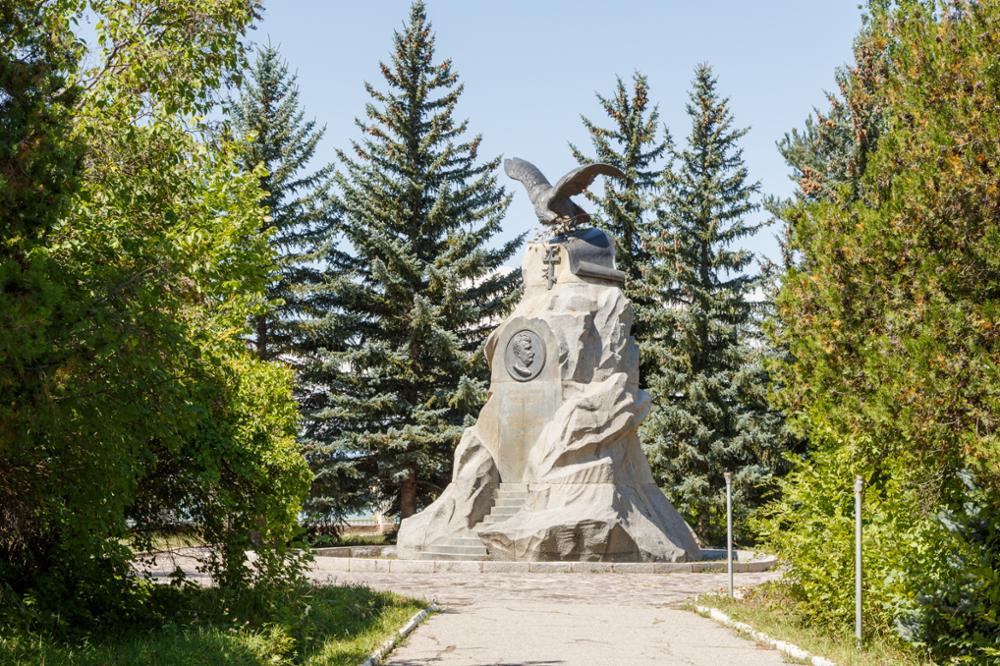
The great Russian explorer who lent his name to this legendary horse left many marks in Kyrgyzstan. Of Polish origin, Nikolai Przhevalsky (1839-1888) traveled through Central Asia as a geographer and explorer for the Russian Imperial Army. He journeyed through many regions previously isolated and unknown to Europe, but never managed to reach his goal, Lhasa in Tibet.
Przhevalsky spent considerable time in Kyrgyzstan, a land he loved dearly and regarded as his adopted homeland. In fact, it was Kyrgyz people who first told him about this wild horse (the kurtage in Kyrgyz) and showed him the hide of one of the animals, before he saw it with his own eyes in Mongolia.
After several passages through Kyrgyzstan, Nikolai Przhevalsky died near Karakol of typhoid, a disease he contracted in the mountains. He was buried, as requested, in Karakol, near Lake Issyk Kul. Moreover, this city bore his name for a long time. Today you will find there a museum dedicated to the travels of the great explorer, where you can notably admire his drawings of the famous Przewalski's horse.
Frequently asked questions
Przewalski's horses can be observed in several reserves in Mongolia, as well as in parks in France, Belgium, Spain, and Ukraine. Approximately 400 live in the wild.
It is the oldest species of horse living in the wild state, similar to prehistoric horses painted in the Paleolithic caves.
DNA studies from 2018 show that it descends from horses domesticated by the Botai 5,500 years ago, but it has lived in the wild for millennia.