Top Cultural Activities to Experience in Kyrgyzstan
A country of mountains par excellence, Kyrgyzstan is far more than the perfect destination for trekking on foot or horseback.
A country of mountains par excellence, Kyrgyzstan is far more than the perfect destination for trekking on foot or horseback. It's also an ideal place to encounter an authentic nomadic culture, life in its simplicity and harmony with nature, and a remarkably welcoming people. Here are some essential cultural activities to experience during a stay in Kyrgyzstan:
Erecting a Yurt
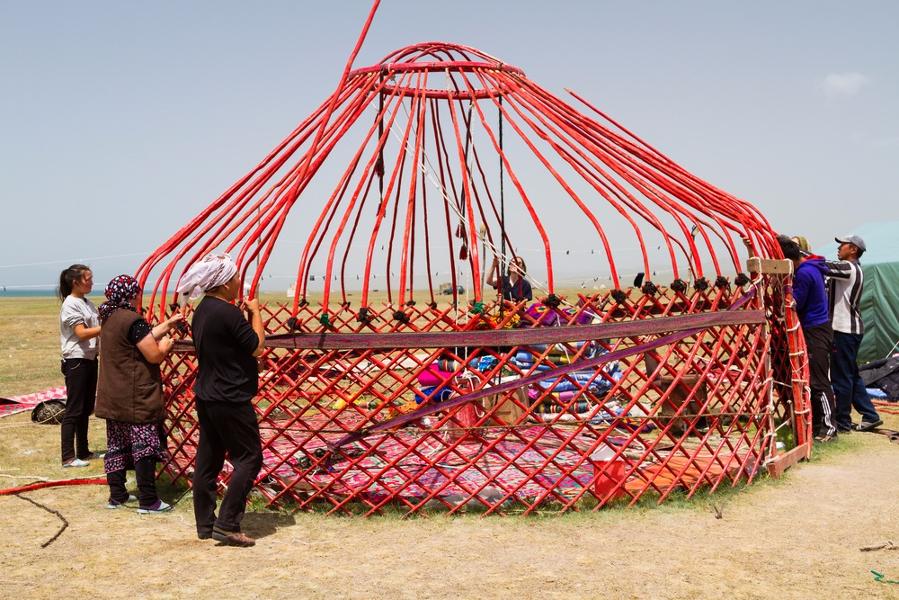
What better symbol for Kyrgyzstan than the yurt, home of nomads for centuries? During your trip to Kyrgyzstan, you'll have more than one opportunity to sleep in a yurt with nomadic families. But for an even more unique experience, stop in the small village of Kyzyl Tuu on the south shore of Issyk Kul Lake to learn how to erect a yurt yourself. Here, local families have been crafting traditional yurts generation after generation. From woodworking to felt decoration, they do everything by hand using natural materials. This village is also home to the world champion yurt-erecting teams (yes, this competition exists!). Seize the opportunity to learn how to assemble a yurt and immerse yourself in nomadic life.
Making a Felt Carpet
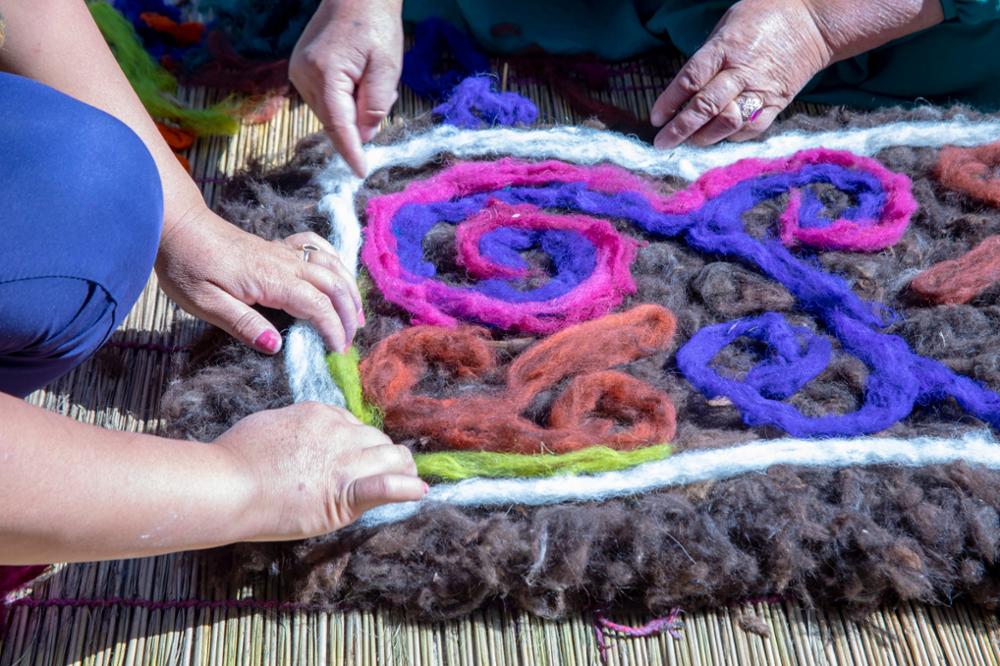
Kyrgyz craftsmanship centers around felt, a material made from sheep's wool that provides insulation from both cold and heat. Nomads have used felt for centuries to create essential items for life, including yurts and clothing. Since then, it has been used to make carpets and other modern decorative objects. The most renowned is the shyrdak, this Kyrgyz carpet inscribed on the UNESCO World Heritage list. Made entirely of felt, it is traditionally given by a mother to her daughter before marriage as a promise of happiness and a long life. During your visit, you'll be able to tour a felt workshop, particularly in the villages of Kochkor or Bokobayevo. Local women will show you how they craft felt using traditional techniques, and you can try your hand at it too. It's also the perfect opportunity to pick up some local souvenirs.
Listening to Traditional Music
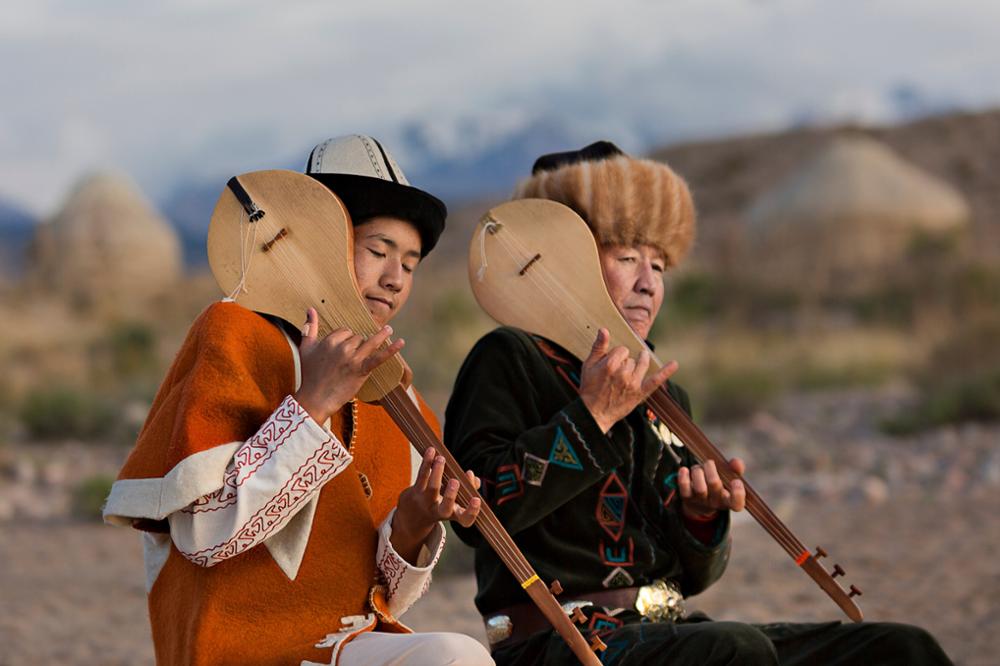
You'll likely notice during your stay that Kyrgyz people love music. They often burst into song, a habit inherited from nights spent in yurts by their nomadic ancestors. They have a musical style all their own, with songs that celebrate the steppes and mountains, love, solitude, and nature. The Kyrgyz also have their own musical instruments, the most famous being the komuz, a small three-stringed wooden guitar made from apricot wood. Take advantage of your time in Kyrgyzstan to attend a traditional music concert and discover the instruments of the nomads, which echo the sounds of nature.
Witnessing a Manaschi Performance
Did you know that the world's longest epic poem is not the Odyssey but the Kyrgyz epic of Manas? Passed down orally through generations of nomads, it is deeply embedded in Kyrgyz identity, as the numerous monuments to Manas throughout the country will remind you. The Manas epic is recited in a trance-like state by Manaschi, storytellers who memorize it completely. Usually, they don't choose this path—it's revealed to them through dreams or visions. Dressed in traditional clothing and a kalpak hat, the Manaschi recount the adventures of Manas in an almost possessed chant. A truly impressive spectacle to witness at least once in your lifetime!
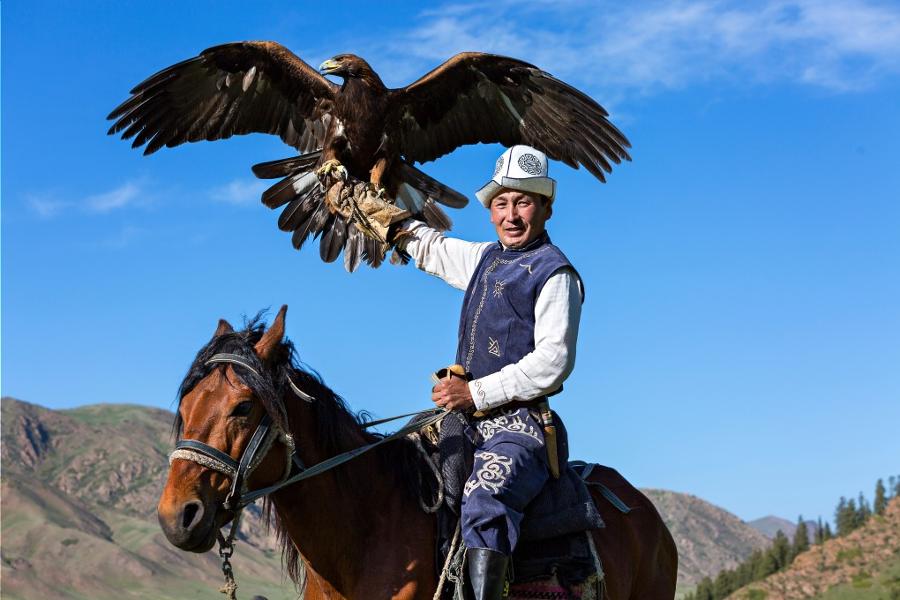
Watching Eagle Hunting
Another nomadic tradition, eagle hunting is practiced particularly near Bokobayevo, on the south shore of Issyk Kul Lake. Eagles were trained to hunt large game, even ibex or Marco Polo sheep. Their handlers, on horseback, would then retrieve the kill. The bond between eagle and handler was truly unique. You can witness a demonstration of eagle hunting during a nomadic festival in Kyrgyzstan or by special request. Usually, the eagle hunts a hare, but you can ask for it to hunt a hide instead, or request that the prey not be killed.
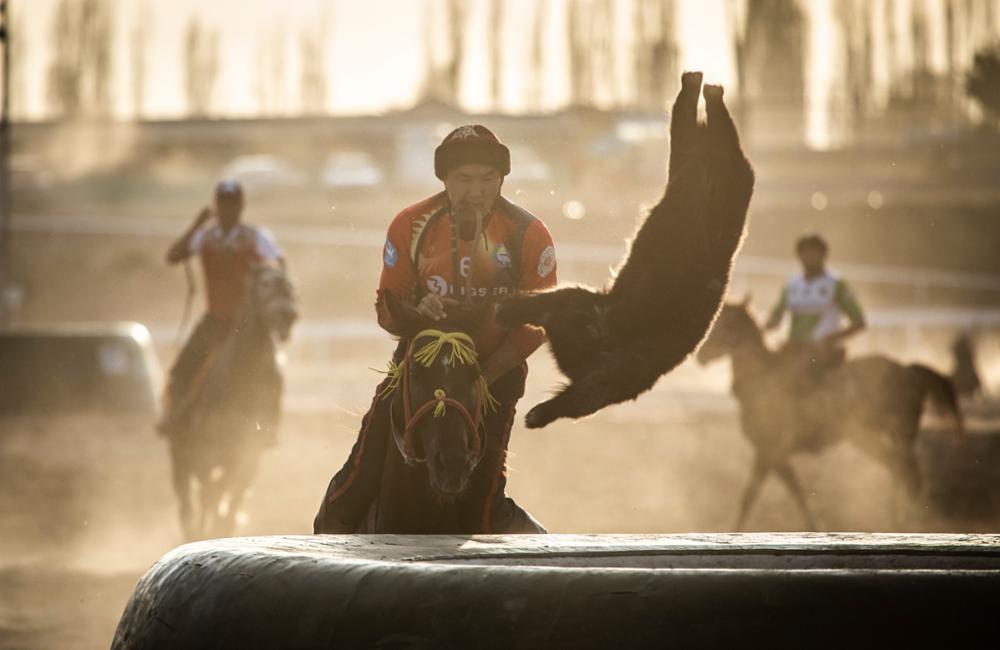
Attending Nomadic Games
To best understand nomadic culture, there's nothing quite like watching nomadic games. Among them is the famous Kok-Boru or Buzkashi, played throughout Central Asia. This horseback sport involves catching a sheep carcass from your horse and throwing it into a goal. It's an opportunity to admire the flexibility and dexterity of the riders and their mounts. There are also many other games, less well-known but equally fascinating to watch, such as horseback wrestling, horse racing, and other games unique to Kyrgyzstan to discover during your visit.
Frequently asked questions
The best time to discover nomadic culture in Kyrgyzstan is summer, from June to September. During this season, nomadic families move up to the alpine pastures (jailoos), nomadic festivals are organized, and eagle hunting can be observed. Autumn (September-October) is also favorable for certain cultural events.
Absolutely! In the village of Kyzyl Tuu, local families regularly welcome foreign tourists to learn how to erect a yurt. It is recommended to go through a local agency or English-speaking guide who can serve as an interpreter and facilitate the cultural experience.
The shyrdak is a traditional Kyrgyz carpet made entirely of wool felt, inscribed on UNESCO's List of Intangible Cultural Heritage of Humanity. It is traditionally given by a mother to her daughter upon marriage. You can purchase one in the craft villages of Kochkor or Bokobayevo, as well as in Bishkek's markets. Expect to pay between 50 and 200 euros depending on size and quality.
The Manas epic is considered the longest epic poem in the world, far longer than the Odyssey or Iliad. Transmitted orally through generations, it recounts the adventures of Kyrgyzstan's national hero, Manas. Manaschi, specialized storytellers, recite it in song and trance-like state during cultural festivals. Performances can be arranged upon request through a local agency, particularly in Bishkek or during nomadic festivals.
Eagle hunting is practiced mainly near Bokobayevo, on the south shore of Issyk Kul Lake. Demonstrations are organized during nomadic festivals or upon request from local eagle-hunting families. It is recommended to contact a local travel agency to arrange this experience. The best time is summer and early autumn.
Kok-Boru (or Buzkashi) is a traditional Central Asian equestrian sport that involves catching a sheep carcass on horseback and depositing it in a goal. It is one of the most spectacular sports of nomadic culture. You can watch matches during Kyrgyz national holidays, nomadic festivals like the World Nomad Games, or sometimes upon request in villages near Bishkek or Issyk Kul Lake.