Customs and Traditions Surrounding Birth in Kyrgyzstan
Kyrgyzstan is a country rich in traditions, and newborns are far from exempt from them.
Kyrgyzstan is a country rich in traditions, and newborns are far from exempt from them. For a long time, lacking adequate resources, Kyrgyzstan struggled with high infant mortality rates. Newborns rarely survived birth or lived only a few days.
Facing this challenging situation, several Kyrgyz traditions emerged with the purpose of ensuring long life and good health for infants. Some were established to protect the baby by warding off evil spirits and demons.
The course of childbirth in old Kyrgyzstan
At childbirth, a midwife, or "kindik-ene," was called to assist with the birth. But her role did not stop there—the kindik-ene was also present to protect the newborn from evil spirits and demons.
Considered the reincarnation of the Earth goddess and the protector of mothers and small children, the midwife was to ward off evil through incantations. At the end of childbirth, gifts were offered to her—an animal hide or the finest part of mutton.
Following the birth, a Kyrgyz celebration called "dje-entek toi" was organized. Guests were offered melted butter, called "sary mai." Carefully preserved in the stomach of a slaughtered lamb, it was removed from its container only at the time of the reception.
In case of premature birth
When a baby was born prematurely, it was swaddled in fox fur. This fur was then suspended from the wooden framework of the yurt. It was subsequently moved around the dwelling from the right side of the door at intervals of nine months, nine days, nine hours, and nine minutes—corresponding to the normal gestation period. Only at the end of this procession was the child considered "fully born," and the "dje-entek toi" could take place in proper form.
The Beshik toi ceremony, after childbirth
Another tradition after childbirth involved wrapping the baby for the first time and placing him in a cradle made of juniper wood called "beshik." Tradition held that it was an elderly woman of the tribe who placed the child in the cradle. According to beliefs, this ensured a long life for the child, allowing him to live as long as the elderly woman chosen.
Presentation of the child to the village
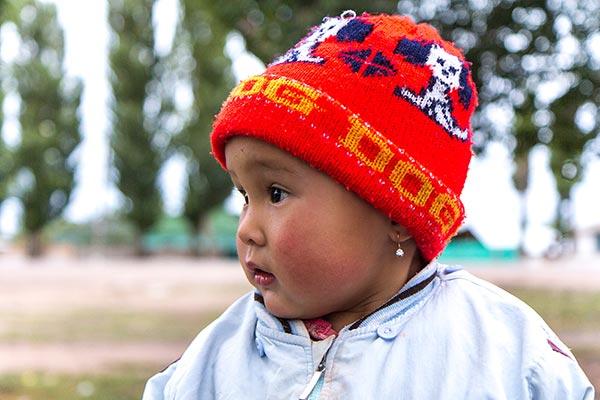
After birth, the newborn was typically isolated from the outside world for a period of 40 days. Following this period, the child was presented to the rest of the village. Tradition dictated that 40 neighbors bring pieces of fabric that would be used to make clothes for the child. Each piece of fabric represented the 40-day anniversary of the child's birth. It is said that these pieces of fabric possessed magical properties and brought good fortune to those who wore them.
A baby's first steps, a milestone in Kyrgyzstan
Everyone knows that a baby's first steps are an important event. In Kyrgyzstan, this first milestone in life is celebrated. The first steps ceremony, "tushoo kesuu," takes place on a day when the child's legs are tied with two ropes: one white representing good and the other black representing evil. Guests participated in several short races, and the winner had the honor of cutting the ropes to free the child and let him walk.
Kyrgyz traditions and customs surrounding birth today
Currently, with technological advances, Kyrgyzstan benefits from better medical services. The infant mortality rate has therefore dropped considerably, and more and more families are beginning to abandon all the ceremonies and traditions mentioned above. That said, certain ceremonies, such as "tushoo kesuu," remain popular in the country. But many families no longer have a "beshik" (the juniper cradle) or even a midwife warding off evil spirits.
Frequently asked questions
The 'tushoo kesuu' is a Kyrgyz ceremony that celebrates a baby's first steps. During this celebration, the child's legs are tied with two ropes — one white symbolizing good and one black representing evil. Guests participate in races and the winner has the honor of cutting the ropes to free the child and allow him to walk freely.
The 'beshik' is a traditional Kyrgyz cradle made of juniper wood. According to tradition, it is an elderly woman of the tribe who places the newborn in this cradle for the first time, in order to give him longevity and good health.
The 'kindik-ene' is the traditional Kyrgyz midwife. She assisted in childbirth and protected the newborn from evil spirits through incantations. Considered the reincarnation of the Earth goddess, she was compensated with gifts such as an animal hide or mutton.
With improvements in medical services, many Kyrgyz families have gradually abandoned some of these ceremonies. However, traditions such as 'tushoo kesuu' (the first steps ceremony) remain popular and are still celebrated in many families throughout the country.
In the case of premature birth, the baby was swaddled in fox fur and suspended from the yurt's wooden framework. The fur was then moved around the yurt at intervals of nine months, nine days, nine hours, and nine minutes — symbolically reproducing the normal duration of gestation. Only after this ritual was the child considered fully born.