The Petroglyphs of Cholpon Ata
The Petroglyphs of Cholpon Ata
Open-air museum spanning 42 hectares at Cholpon-Ata: nearly 5,000 petroglyphs carved between the Bronze Age and Turkish period, facing Lake Issyk-Kul.
On the northwestern outskirts of Cholpon-Ata, on the northern shore of Lake Issyk-Kul, an open-air archaeological site holds nearly 5,000 carved rocks scattered across approximately 42 hectares. The oldest engravings date back to the end of the Bronze Age, around 1500 BCE, and bear witness to more than two millennia of human occupation at the foot of the Kounghei Ala-Too mountains.
Why Visit the Cholpon-Ata Petroglyphs
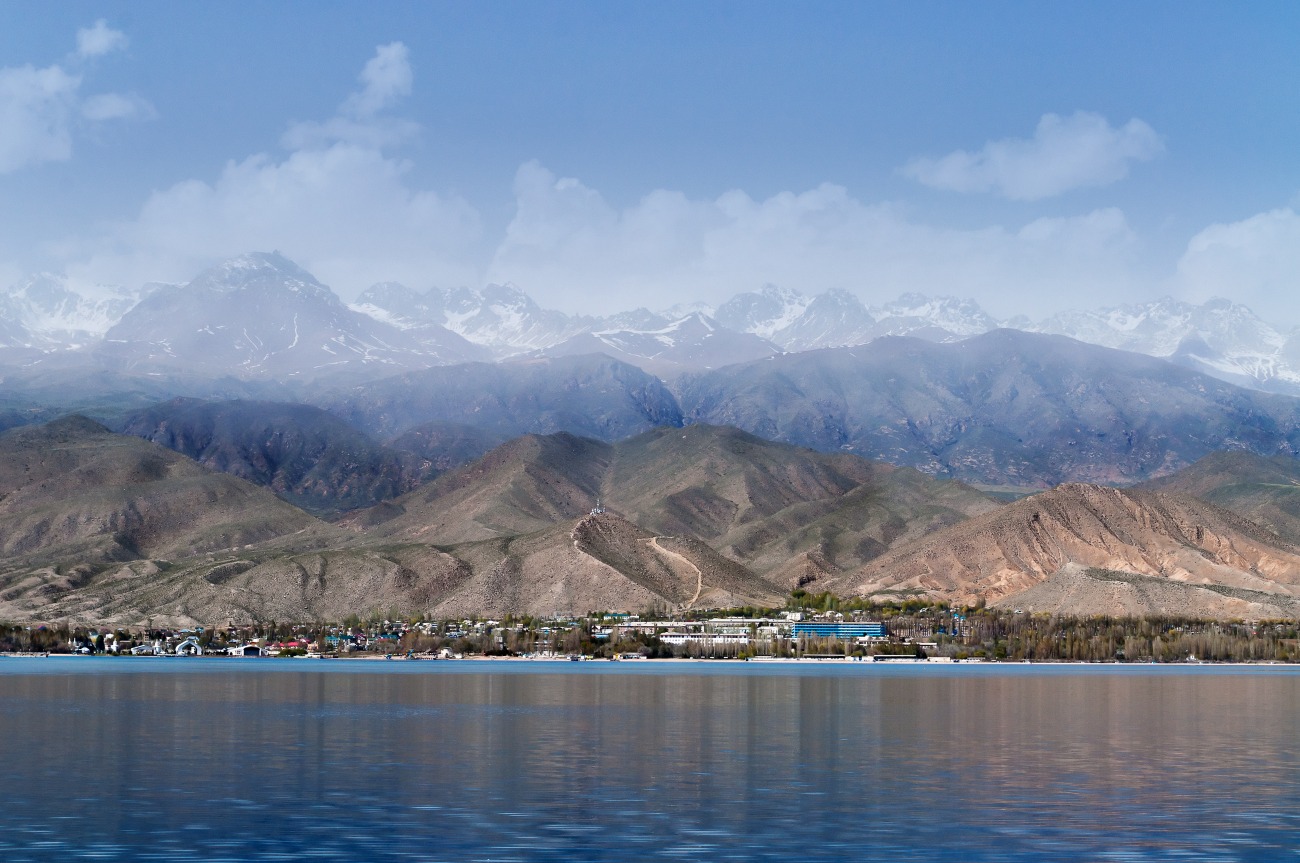
The site offers a direct window into Central Asian prehistory, without glass cases or reconstructions. The stones rest where nomads carved them, in an open steppe landscape that has not fundamentally changed since the Bronze Age. For those interested in rock art, archaeology, or simply the history of steppe peoples, this is one of the densest and best-preserved collections in Kyrgyzstan. The visit combines historical significance with panoramic views of Cholpon-Ata Bay and Lake Issyk-Kul.
History of the Site
While a few petroglyphs date to the end of the Bronze Age (around 1500 BCE), the majority were created by Saka-Usun tribes, who inhabited the region from the 8th century BCE to the 1st century CE, before the arrival of the Kyrgyz.
The Saka considered this place sacred. Their priests performed sacrifices and rituals in honor of the sun god here. The settlements where these priests lived were located below, on the shore: today they are submerged beneath the waters of Cholpon-Ata Bay, whose level has fluctuated over the centuries.
The most recent engravings belong to the Turkish period, between the 5th and 10th centuries. The site thus functioned as a ritual and symbolic space for nearly two thousand years.
What to See
The museum entrance presents a map with two possible routes:
- Short route: approximately 20 to 30 minutes, through the central zone where the most accessible engravings are concentrated.
- Long route: allows you to reach the upper part of the site and enjoy a viewpoint over Cholpon-Ata Bay and Lake Issyk-Kul.
The oldest petroglyphs are marked with small yellow numbers painted on the rock, helping you locate them among the thousands of blocks scattered across the terrain.
The fauna depicted is characteristic of hunter-herder societies of the steppes: deer, bulls, horses, wild rams, goats, wolves. You'll also see hunting scenes and more complex compositions involving multiple animals and figures.
Practical Information
- Visit duration: allow 30 minutes to 1.5 hours depending on the route chosen.
- Admission: moderate entry fee, payable on site.
- Equipment: closed-toe shoes (rocky terrain), water, hat and sunscreen; no shade on site.
- Accessibility: uneven terrain, not well suited for strollers or people with reduced mobility.
When to Go
The site is open-air and can be visited from late spring to early autumn, when snow has melted and temperatures are mild. The Issyk-Kul region enjoys a milder climate than the rest of Kyrgyzstan thanks to the lake's thermal effect.
To read the engravings clearly, visit early morning or late afternoon: the low-angle light brings out the incisions, which become nearly invisible in the midday sun. Also avoid the hottest hours in July-August.
How to Get There
The site is located approximately 1 to 2 km northwest of central Cholpon-Ata, away from the main road that runs along the lake.
- From central Cholpon-Ata: on foot (20 to 30 minutes' walk) or by taxi for a short ride at a reasonable fare. Drivers often offer to wait during your visit.
- From Bishkek: Cholpon-Ata is 265 km from the capital, roughly 4 to 5 hours by road. Marshrutkas (minibuses) regularly connect the two cities; the site is then reached on foot or by taxi from the center.
Nearby Attractions
The region offers several natural extensions to your visit:
- The beaches and promenade of Lake Issyk-Kul, just minutes from the site.
- The local history museum of Cholpon-Ata, a useful complement for contextualizing the petroglyphs.
- The valleys of Grigorievka and Semionovka, to the north, for mid-mountain hiking.
- The Burana minaret, on the road between Bishkek and Issyk-Kul, another major archaeological site in the country.
Frequently Asked Questions
Frequently asked questions
Plan Your Trip
The Cholpon-Ata petroglyphs fit naturally into a circuit around Lake Issyk-Kul, a classic stage of a Kyrgyzstan journey. To build a customized itinerary combining culture, history and trekking, explore our Kyrgyzstan tours.
Interested in this visit?
We can include it in your personalised itinerary.