Essential items to pack for trekking in Kyrgyzstan as a woman
Kyrgyzstan is a mountainous country where trekking has become essential for every traveler. But how do you pack your bag? What should you bring for an active vacation?
Kyrgyzstan is a mountainous country where trekking has become essential for every traveler. But how do you pack your bag? What should you bring for an active vacation?
Trekking in Kyrgyzstan requires careful organization, particularly when it comes to your luggage if you're planning one or several treks during your trip. Whether it's a day trek or a multi-day hike including nights camping in the Kyrgyz wilderness, you need to think about your backpack and what to put in it.
To help you pack for a trekking trip in Kyrgyzstan, we've compiled a (non-exhaustive) list of essentials.
Clothing
When heading out on a trek, you need to balance bringing enough clothes with not overloading yourself. Here's a fairly complete list of what you can bring:
2 or 3 short-sleeve t-shirts: opt for lightweight, insulating and moisture-wicking t-shirts. Polyester t-shirts work great—they're breathable, fold easily, weigh little, and dry quickly.
1 or 2 tank tops: to wear under a sweater or long-sleeve shirt when it's cold. To stay comfortable and undress when it's really hot.
2 long-sleeve t-shirts: for when the weather cools down. Like short-sleeve t-shirts, prefer lightweight, breathable materials that dry easily.
1 convertible pants: the kind of practical pants perfect for trekking. They keep you warm in the morning and evening and convert to shorts when the heat arrives.
1 or 2 leggings: comfortable, these bottoms can be worn in any weather. They can also serve as pajamas or under-pants when it's cold. Choose leggings made from quick-drying material—polyester is ideal.
1 or 2 sweater(s) or fleece jacket(s): for cool evenings and mornings, fleece is an essential for staying warm.
1 Softshell jacket: the kind of windproof, lightweight, flexible and breathable jacket that will be very useful when it's not very warm. It doesn't take up much space in your pack and is very comfortable to wear.
2 or 3 pairs of hiking socks: very important for keeping your feet healthy in your shoes. Hiking socks are typically padded in strategic places and allow your feet to breathe.
2 pairs of sports socks: they come in handy when your hiking socks are wet. You can also wear them at night when it's very cold.
1 pair of liner gloves or 1 pair of lightweight gloves: ideal for morning or evening when the chill sets in at altitude.
1 raincoat style K-Way or Gore-tex: to keep you dry in rainy weather.
5 pairs of underwear: prefer cotton underwear for comfort or polyester for quick drying. Avoid any delicate lace underwear that could irritate you.
1 or 2 sports bra(s): easier to carry than a regular bra, sports bras provide excellent support and remain comfortable for long days of hiking.
1 swimsuit: it can serve as an undergarment if needed, but mainly, you won't regret it if you want to take a quick dip in a lake, river or hot spring along your trek.
1 hat or baseball cap: essential to protect your head from the sun and avoid sunstroke.
A good pair of sunglasses: to avoid eye strain.
A lightweight scarf or neck gaiter-style buff: besides protecting you from the cold, it can also cover your face to protect you from wind and dust. You can also use it on your head to protect yourself from the sun.
A good pair of hiking shoes: preferably choose high-top or mid-top Gore-tex hiking shoes with OrthoLite inner soles. Don't set out with brand new shoes at the risk of getting blisters very quickly.
A pair of flip-flops: takes up no space and it's so nice after a long day of hiking to have your toes in the air.
Trekking and camping equipment
Some equipment will be provided by your Kyrgyzstan travel agency—don't hesitate to ask us. In the meantime, here's a list of essential equipment for your trek in the mountains of Kyrgyzstan:
Trekking poles: essential to accompany you in the mountains, trekking poles are real support to relieve your joints and avoid accidents like slipping. Today there are carbon telescopic poles that are very lightweight, perfect for traveling.
Sleeping bag: a sleeping bag should be chosen carefully. Prefer a down sleeping bag adapted to temperatures below 0°C. Remember to check the weight of the bag and its compression rating.
Tent: the quality of the tent is very important. It should give you enough space to sleep comfortably and store your belongings to keep everything dry. The tent must be waterproof, set up and break down quickly, and take up minimal space when folded.
Inflatable mat: choosing a mat is also important. It will insulate you well from the ground whether for sleeping or simply sitting dry. There are now very lightweight inflatable mats that inflate quickly without requiring a pump.
A washing bag: besides being useful for your small laundry, this waterproof bag keeps your personal items and electronics dry in case of bad weather.
Flashlight or headlamp: essential for nights in the wilderness.
Water bottle: to be used with purifying tablets, to always have water with you.
Microfiber towel: takes up minimal space and dries quickly.
A Swiss Army knife: always handy in any situation.
Multi-tool utensil, cup and bento-style food container: because you need to eat during your trek, opt for a container that's easy to wash and doesn't take up too much space, a cup that can serve as a glass, and a multi-tool utensil with integrated fork and knife or spoon (sporknife).
Lighter: more practical than flint, a lighter will help you start a fire or ignite gas for your camp stove.
Small camp stove with gas cartridge: to eat hot food or heat water for tea, for example. Very nice after a long day of hiking. Of course, opt for a lightweight, compact stove to carry more easily.
A microfiber cloth to dry your dishes after use, your hands, or other things.
Toiletries and first aid kit
Even though it's not always easy to shower during camping, there are a few essential products to stay clean during your trek.
Dry shampoo and solid shampoo: dry shampoo is perfect when there's no water nearby. Solid shampoo takes up less space in your toiletry bag and makes washing your hair easy. Remember to use organic shampoo to avoid polluting soils or rivers.
Soap like Marseille soap: allows you to wash yourself and also wash your clothes.
Toothpaste and toothbrush: do we really need to explain why this is essential?
Roll-on or solid deodorant: easier to transport than spray deodorants.
A comb rather than a brush for considerable space savings (okay, it's more painful than a brush, but you have to know what you want).
Wipes and no-rinse antibacterial gel to feel cleaner quickly (don't throw wipes in nature, of course).
Sunscreen
Basic medications: paracetamol, anti-nausea, anti-vomiting, anti-diarrheal.
Blister pads and regular bandages.
Cream for sprains and bruises + bandage.
Water purification tablets.
Insect repellent.
Steri-Strips in case of a slightly deep cut
A menstrual cup: more economical and ecological, the cup is very practical for staying clean and dry during menstruation.
Electronics
You don't need to overload yourself with electronics, but certain devices remain almost essential:
A camera to capture the best moments of your trek. It's up to you to decide what works best for your equipment. Check out our photography enthusiast's tips for beautiful travel photos.
An unlocked phone: you can then add a local SIM card and enjoy internet more easily in cities. Your phone also lets you take nice photos quickly.
An e-reader like Kobo or Kindle: not essential, but it can be really nice to settle down and read after a good day of hiking.
1 Power bank to recharge your phone and camera batteries during your trek. Remember to charge it well before you leave ;)
Other small essentials
A plastic pouch to keep all your documents dry
A bag for your trash that you'll dispose of in a bin once you reach the city.
Some food like dried fruit or cereal bars: even though the agency provides food, it's always nice to have a few snacks with you in case you get hungry.
A waterproof cover for your backpack.
Backpack
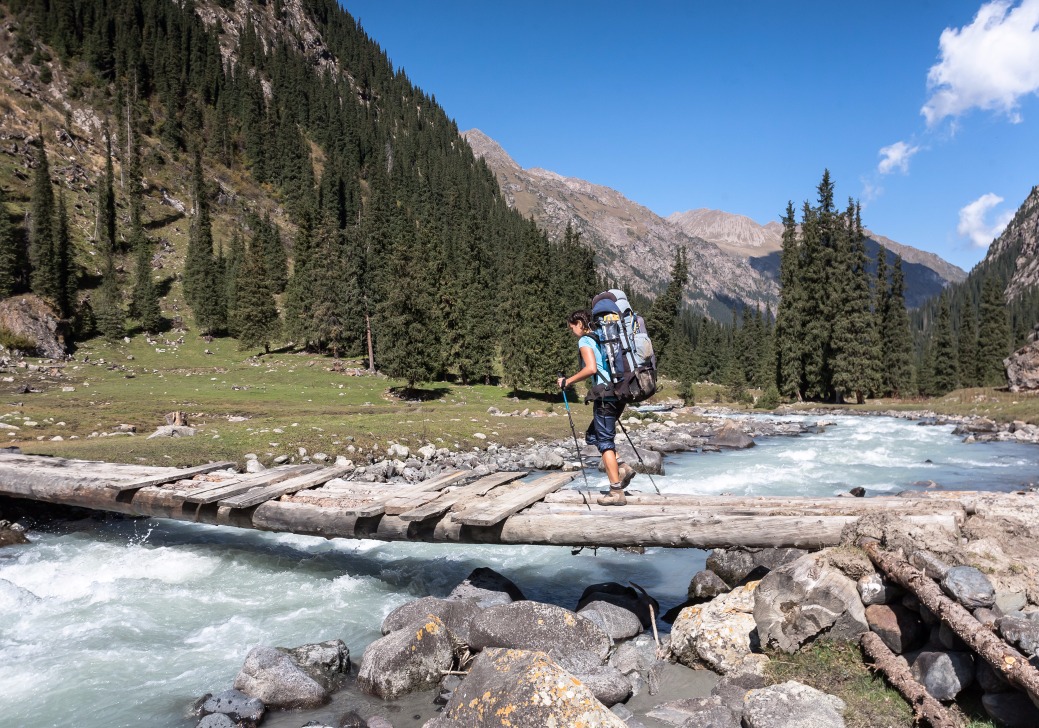
Your backpack is very important—it should be suited to your size. Don't take one that's too large so you don't overload yourself, but make sure it's large enough to carry everything you need. Depending on the equipment you need to bring and the number of trekking days, opt for a 50 or 65-liter backpack. Your backpack should rest on your hips, not your shoulders, to be more comfortable and prevent back problems.
Depending on the season
Clothing choices often depend on the season, but since treks in Kyrgyzstan usually take place during summer months, we've based our clothing list on what's suitable for summer. Nevertheless, you should know that weather changes aren't uncommon here, and you could go from very hot temperatures to very cold temperatures or from bright sunshine to impenetrable fog in just a few hours. You need to prepare your belongings accordingly.
Of course, if you want to trek in Kyrgyzstan in winter, you'll need to adapt your pack to the country's sometimes extreme weather conditions. That might be the subject of a future article.
Frequently asked questions
For trekking in Kyrgyzstan, opt for a 50 to 65-liter backpack depending on the length of your hike. It should be well-fitted to your body type, rest on your hips rather than your shoulders, and be equipped with a waterproof cover. For a day trek, a 20 to 30-liter pack is sufficient.
Essential clothing for a woman trekking in Kyrgyzstan includes breathable short-sleeve and long-sleeve t-shirts, convertible pants, versatile leggings, a fleece jacket, a Gore-Tex raincoat, underwear in cotton or polyester, sports bras, and most importantly, well-broken-in hiking shoes.
A menstrual cup is the most practical and ecological solution for managing your period during a trek. It requires no waste, empties easily with a bit of water, and can stay in place for several hours. Also remember to bring cleaning wipes and no-rinse antibacterial gel.
Yes, a sleeping bag is essential for camping nights in Kyrgyzstan. Choose a down model that's comfortable to temperatures below 0°C, as nights at altitude can be very chilly even in summer. Check the weight and compression rate to make transport easier.
Bring a water bottle and water purification tablets to make river and spring water safe to drink. You can also use a portable water filter. Avoid drinking directly from springs without prior treatment, even if the water looks clear.
Some agencies specializing in Kyrgyzstan treks may provide camping equipment (tents, mats, camp stoves, cooking utensils). It's best to check directly with your agency before packing to avoid duplicates and lighten your load.