Kurmanjan Datka, Queen of the Kyrgyz, a Feminist Ahead of Her Time
Kurmanjan Datka is one of the rare feminine heroines celebrated in Central Asia. Queen of the Alai in the 19th century,
Kurmanjan Datka is one of the rare feminine heroines celebrated in Central Asia. Queen of the Alai in the 19th century, it was she who managed to unite the Kyrgyz tribes and sign peace with the Russian Empire, saving thousands of lives. For the Kyrgyz people, this "mother of the nation" carries unparalleled historical and symbolic importance.
A Strong and Feminist Woman
Kurmanjan Datka (1811–1907) is celebrated even today for her strength of character and independence. She grew up in a nomadic family in the mountains of the Alai, south of the city ofOsh. A horsewoman from her earliest days, she was deeply connected to her people, always ready to help those around her.
Kurmanjan had been promised in marriage to a man much older than herself, whom she did not know. This was the norm at that time. On her wedding night, after she was already settled in her new family and new yurt, Kurmanjan fled and rode back home.
It was this act of unprecedented courage and feminism that would make her so famous. For Kyrgyz tradition had never accepted a woman fleeing her husband and his family, refusing a marriage. Even today, it is extremely rare for a young girl, even if abducted and forced into marriage, to stand up to her husband. Kurmanjan did so nearly two centuries ago, defying all the rules of society and establishing herself eternally as a symbol of feminism.
"Datka", A General Without Equal
After this first unwilling marriage, Kurmanjan met Asylbek Datka, who ruled over the tribes of southern Kyrgyzstan. They fell in love with each other, and the general freed her from her first marriage and took Kurmanjan as his wife. They had five sons. From the beginning of this union, Kurmanjan actively participated in political life, taking her husband's place during his long journeys.
It was following the tragic death of Asylbek that Kurmanjan became "Datka", which means general. This title was reserved for men, and she is the only woman to bear it. The Emir of Bukhara, who then ruled an empire comprising the lands of southern Kyrgyzstan, approved this title himself, making Kurmanjan the heir of Asylbek Datka. She had nonetheless refused to have her people pay taxes to the empire.
The Saving Peace
At that time, the Russian Tsar had already conquered northern Kyrgyzstan and was advancing toward the South. Kurmanjan and her sons resisted initially, but faced with the power of the Russian armies, she had to flee with her people to Kashgar, in China. Blocked by the Chinese army, Kurmanjan and her tribe were forced to turn back and return to the Alai after a long journey. Finally, after many defeats and losses, Kurmanjan understood that there was no other solution than to accept peace with the Russian Empire, which she did in 1876 to prevent a bloodbath. She kept her title of Datka, and had herself called "Your Majesty" by Russian soldiers, who admired her as much as her own people did.
Her sons, however, continued to fight. One of them was captured by the Russian army and sentenced to death. Kurmanjan once again showed immense courage: she attended the execution of her son in Osh and ordered her people not to go to battle, as they wished. She is said to have then declared: "It causes me great pain to see my son die, but I cannot lose my people". Thanks to her diplomacy and sacrifice, the people of the Alai continued to live in peace.
A Venerated Leader Today
Kurmanjan Datka is admired even today throughout Kyrgyzstan and Central Asia as a rebellious and feminist young woman, and as a strong leader who brought peace to her lands and sacrificed her son for the benefit of her people.
In 2014, Kyrgyzstan released a film dedicated to the life of Kurmanjan Datka, from her childhood to the execution of her son. Deeply moving, it highlights the beauty and strength of character of this historical figure. Be sure to add it to your list of films to watch to prepare for your trip to Kyrgyzstan.
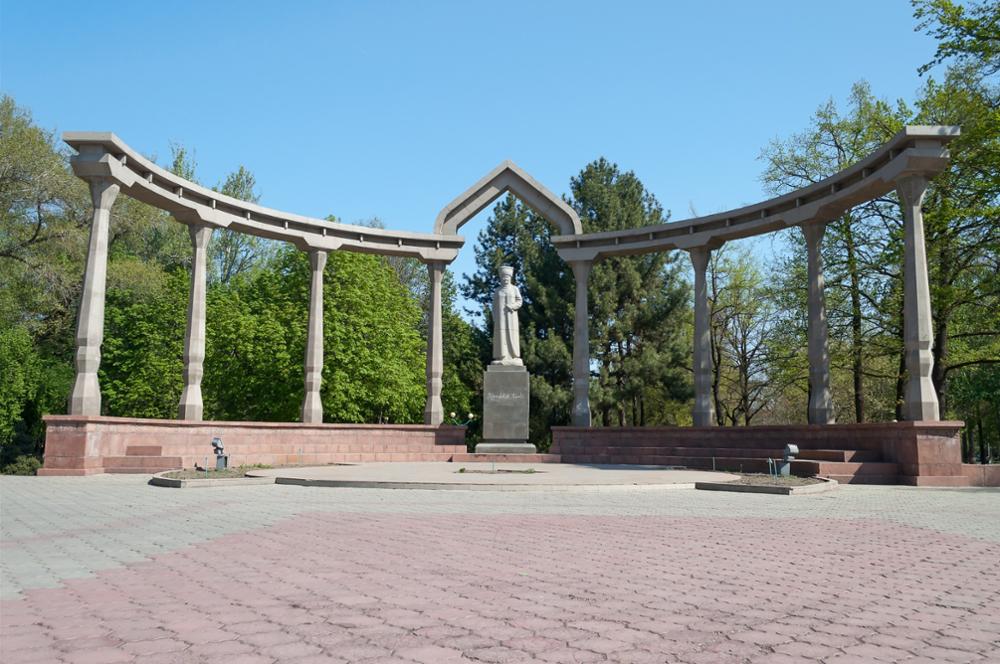
During your visit toBishkek, you can see a beautiful monument dedicated to her in the central park "Dubovy", just beyond Erkindik Boulevard. You will also find the portrait of Kurmanjan Datka on the 50 som banknote. This great woman left an important feminist, democratic, and patriotic legacy to today's Kyrgyz people. Moreover, Kyrgyzstan is the only country in the region to have had a female president.
Frequently asked questions
Kurmanjan Datka (1811–1907) is a major historical figure of Kyrgyzstan. Queen of the Alai region in the 19th century, she is the only woman to have held the title of 'Datka' (general). She is famous for having negotiated peace with the Russian Empire in 1876, saving her people from a bloodbath, and for her early act of rebellion against a forced marriage.
'Datka' is a military title equivalent to that of general in Central Asian societies. Traditionally reserved for men, it was granted to Kurmanjan by the Emir of Bukhara after the death of her husband Asylbek Datka. She remains to this day the only woman to have held it.
The monument dedicated to Kurmanjan Datka is located in the central park 'Dubovy' in Bishkek, beyond Erkindik Boulevard. It is a must-see site when visiting the Kyrgyz capital.
Yes, Kyrgyzstan released in 2014 a film entirely dedicated to the life of Kurmanjan Datka, from her childhood to the execution of her son. This film is highly recommended to prepare for a trip to Kyrgyzstan and to better understand this historical figure.
Kurmanjan Datka is considered feminist because, at a time when women had no autonomy, she fled a forced marriage on her wedding night, defying the rules of traditional Kyrgyz society. She subsequently rose to political and military power, becoming a general and leader at a time when these roles were exclusively male.