Afrasiab Museum
Afrasiab Museum
In Samarkand, the Afrasiab Museum preserves the Ambassadors' Frescoes and vestiges of the ancient Sogdian city, a major stop on the Silk Road.
The Afrasiab Museum preserves the remains of the ancient Sogdian city that preceded Samarkand, in Uzbekistan. Built in marble overlooking an archaeological site spanning 219 hectares, it houses the celebrated Ambassadors' Frescoes, 7th-century murals documenting Sogdian diplomacy along the Silk Road.
Why visit the Afrasiab Museum
The museum displays artifacts rarely brought together elsewhere in Central Asia: Greco-Bactrian ceramics, coins and Macedonian swords inherited from Alexander the Great, Zoroastrian ossuaries, jewels and bone chessboards testifying to the region's pre-Islamic prosperity.
The main attraction, however, remains the Ambassadors' Frescoes, a cycle painted around 650–660 CE that constitutes one of the rare visual records of the Sogdian court and its exchanges with Tang China, Korea, and Turkic peoples.
History of Afrasiab
Founded in the 7th century BCE, Afrasiab was the principal city of Sogdiana, a Central Asian region whose territory extended between the Amu Darya and Syr Darya rivers. Its civilization reached its height between the 5th and 8th centuries CE, driven by trade along the Silk Road.
The city was conquered by Alexander the Great in 329 BCE, who renamed it Marakanda, and later by the Arabs in the early 8th century. It was almost entirely destroyed by Genghis Khan in the 13th century during the Mongol invasion, which explains the state of abandonment visible on the plateau today.
Systematic archaeological excavations began in 1873 and continue to this day. It was in 1965, during construction of the Tashkent road, that a bulldozer uncovered the Sogdian painted cycle, unfortunately damaging part of it. The museum was built to house it and opened its doors in 1970.
What to see at the museum
The marble building unfolds across two floors a rich collection of over 20,000 pieces (not all displayed simultaneously). The tour follows the chronology of excavations and the city's development.
The first rooms
Archival photographs and relief maps trace the history of archaeological campaigns undertaken since the 19th century. The following rooms document the city's evolution: coins and weapons linked to the Macedonian conquest, Greco-Bactrian ceramics, fire-cult altars, carved ossuaries and objects adorned with solar symbols illustrate the place of Zoroastrianism, the dominant religion in Sogdiana now vanished.
The Ambassadors' Frescoes
The main room reproduces the exact proportions of the reception hall of Sogdian king Varkhuman, who reigned around 650–660 CE. Each wall originally bore a different scene.
West wall (facing the entrance): a 16-line Sogdian inscription, painted on the white robe of a figure, specifies the subject: "reception of several embassies by king Varkhuman of the Unash clan". The costumes identify the delegations:
- the Chinese, in black bonnets, bearing clusters of fruits and silk scrolls;
- the Koreans from the kingdom of Koguryo, recognizable by their double-plumed hat;
- the Turks with braided hair;
- the Sogdians, in patterned silk robes, sword and dagger suspended horizontally from the belt.
North wall: two paintings evoke Tang China, the king's ally. One depicts the Chinese empress in a boat with her ladies-in-waiting; the other shows the emperor hunting leopards. The towering stature of sovereigns reflects a Sogdian pictorial convention: disproportion signals gods and kings.
South wall: long interpreted as a wedding or embassy scene, this painting represents the procession of the Zoroastrian New Year, led by Varkhuman to the tomb of his ancestors. The ritual concludes with the sacrifice of a saddled but riderless grey horse and four geese, in accordance with Chinese chronicles of the period.
These frescoes inform on three aspects of Varkhuman's reign: the diplomatic influence of Sogdiana, the alliance with China, and the persistence of Zoroastrian worship.
Practical information
- Hours: open daily, typically 9 AM to 5 PM. Verify the same day, as hours vary by season.
- Admission: moderate entrance fee, usual surcharge for photography.
- Duration of visit: allow 1 to 1.5 hours to tour the rooms, longer if you also explore the adjacent archaeological site.
- Languages: labels in Russian and English; an English-speaking guide is helpful for deciphering the frescoes.
How to get there
The museum is located northeast of the Siob Bazaar, about 15 minutes' walk from the bazaar heading up toward the Afrasiab plateau. You can also take a taxi from central Samarkand or board a marshrutka (shared minibus) running along the city's northern axis.
Nearby attractions
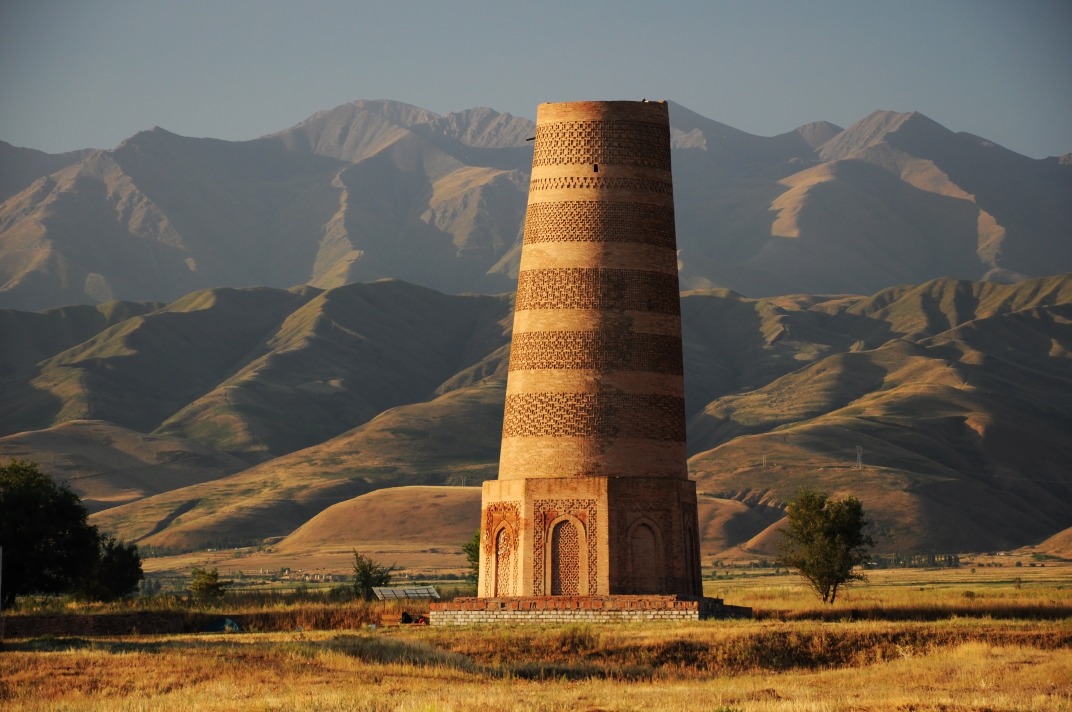
The museum is part of a cluster of historical sites accessible on foot or by taxi from central Samarkand. The nearby Siob Bazaar allows for a gastronomic pause, while the necropolis of Shah-i-Zinda, Ulugh Beg Observatory, and Bibi-Khanym Mosque round out a day focused on pre-Timurid and Timurid history. To expand your Central Asian itinerary, also consider the Burana Minaret or the Cholpon Ata petroglyphs.
Frequently asked questions
Frequently asked questions
The museum is situated in Samarkand, Uzbekistan, on the edge of a 219-hectare archaeological site northeast of Siob Bazaar, on the plateau of the ancient city.
These are a cycle of 7th-century CE murals from the reception hall of Sogdian king Varkhuman. The four walls depict foreign embassies, scenes from the Tang court, and a procession of the Zoroastrian New Year.
Allow 1 to 1.5 hours for the museum alone. If you extend your visit with a walk on the Afrasiab archaeological site, plan for a half-day.
Self-guided visits are possible, but guided accompaniment is recommended for the Ambassadors' Frescoes: their iconographic reading (costumes, Sogdian inscriptions, Zoroastrian scenes) greatly benefits from expert commentary.
Excavations began in 1873, but it was in 1965, during the construction of the Tashkent road, that a bulldozer uncovered the murals that led to the museum's creation, which opened in 1970.
Incorporating the museum into your journey
The Afrasiab Museum naturally fits into a circuit devoted to major stops on the Silk Road in Central Asia. To build an itinerary connecting Samarkand to the landscapes and heritage of neighboring Kyrgyzstan, consult our Kyrgyzstan travel ideas.
Interested in this visit?
We can include it in your personalised itinerary.