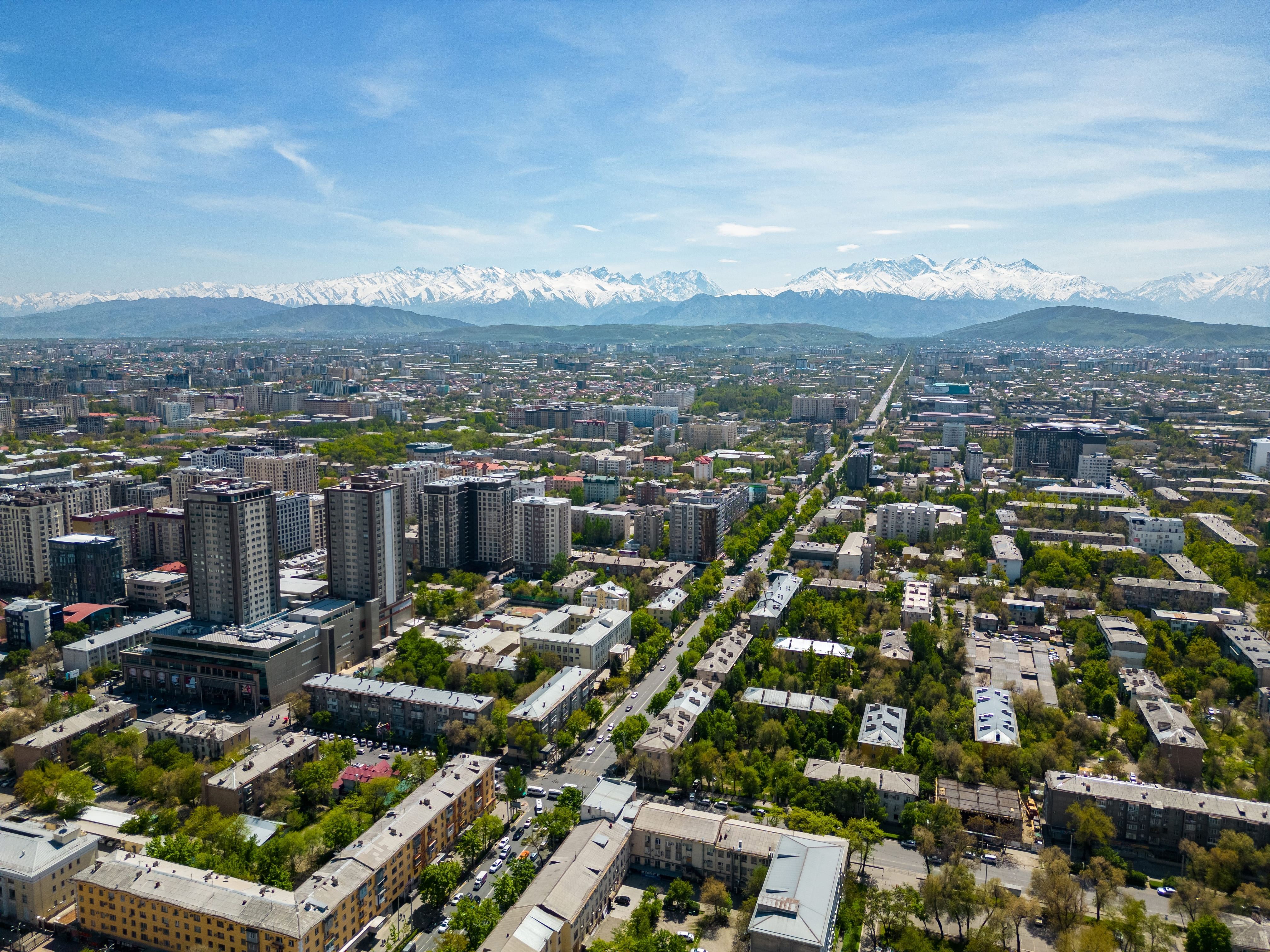
Central Tian Shan
The Central Tian Shan massif, home to Kyrgyzstan's two 7,000m peaks and base for Khan Tengri and Pobeda expeditions, offers high-altitude trekking through glacial valleys, hot springs and Dungan villages around Karakol.
The Central Tian Shan forms the eastern backbone of Kyrgyzstan, straddling the Chinese and Kazakhstani borders. From our agency in Bishkek, we consistently direct clients toward Karakol, 400 kilometres east of the capital, as the logistics hub. This is where porter agencies, helicopter companies to Khan Tengri base camp, and the rare cartographers capable of providing reliable topographic maps of the Inylchek and Engilchek valleys are concentrated.
The region is dominated by two peaks exceeding 7,000 metres: Khan Tengri (7,010 m), a pink marble pyramid ablaze at sunset, and Pobeda Peak (7,439 m), the country's highest point and one of Central Asia's most challenging 7,000-metre summits. Around these giants, the South Inylchek glacier stretches 60 kilometres—one of the longest glacier tongues outside polar regions. Lower down, between 2,800 and 3,800 metres, U-shaped valleys carved by ancient glaciers offer trekking terrain manageable without alpine climbing gear: Jyrgalan, Karakol, Altyn Arashan, and Jeti-Ögüz.
Permanent inhabitants are sparse, concentrated in Karakol (approximately 70,000 people), a former Russian trading post founded in 1869, and scattered villages like Jyrgalan or Aksuu. The population blends Kyrgyz, Dungan (Chinese Muslims who arrived in the 19th century), and Russian communities. In Karakol, we always take our guests to lunch with a Dungan family: ashlyamfu, a cold noodle soup with chilli and vinegar, is their signature dish. The wooden Dungan mosque, built in 1910 without a single nail, and the nearby Orthodox cathedral constructed from logs testify to the city's multicultural character.
Beyond Karakol, the local economy revolves around seasonal transhumance. From June to September, Kyrgyz families ascend to the jailoo (high-altitude pastures) between 2,500 and 3,000 metres, erect their boz üy (yurts), and produce kymyz, fermented mare's milk with its characteristic tart flavour. We work with roughly a dozen such families in Jyrgalan and the Tüp valley to offer homestays: comfort is minimal (dry toilets, spring water, electricity only via solar panel), yet contact with a still-living pastoral lifestyle more than compensates.
Wildlife remains a strong draw. Snow leopards persist, monitored by NABU programme biologists in the Sarychat-Ertash valley, though sightings remain rare even for rangers. More accessible: red marmots at every turn above 2,500 metres, ibex on scree slopes, bearded vultures and golden eagles patrolling the ridges. Brown bears of the Tian Shan occasionally cross paths in Altyn Arashan valley, where sulphurous hot springs at 45°C allow recovery after a day's walk.
One point we emphasise at every briefing: altitude. Trek passes frequently exceed 3,500 metres (Ala-Köl pass at 3,900 m, Telety pass at 3,800 m), and any Inylchek itinerary involves bivouacs above 3,000 metres. Gradual acclimatisation over 2 to 3 days, ideally starting on the shores of Issyk-Kul at 1,600 metres, is not optional.
Highlights
Lake Ala-Köl Trek. Three days of walking from Karakol to reach a turquoise lake at 3,560 metres, framed by moraines and permanent snowfields. The Ala-Köl pass at 3,900 metres is crossed in the morning, before winds strengthen.
Altyn Arashan Hot Springs. Valley perched at 2,600 metres, accessible by demanding 4x4 track or on foot in 5 hours. Open-air sulphur pools at 45°C, rustic dormitories run by Valentin and several Kyrgyz families.
South Inylchek Base Camp. Platform at 4,000 metres beneath Khan Tengri, reached by MI-8 helicopter from Karakol (50-minute flight). Possibility of 1 to 3 days' glacier trekking with a certified guide.
Multicultural Karakol. Painted wooden Dungan mosque from 1910, Orthodox Holy Trinity cathedral in logs, Sunday morning livestock market where Kyrgyz and Kazakh traders negotiate horses and fat-tail sheep.
Jyrgalan Valley. Former mining village reconverted to ecotourism since 2014. Network of 12 marked trails between 2,200 and 3,400 metres, guesthouses run by former miners, ski mountaineering in February–March.
When to Go
The trekking window in Central Tian Shan is narrow: mid-June to mid-September for routes above 3,000 metres. Before mid-June, snow still blocks passes (Ala-Köl remains snow-covered until July in some years). After mid-September, early snowfall may trap high-altitude bivouacs. In July–August, daytime temperatures range from 18 to 25°C in valleys, 5 to 12°C at high camps, with overnight drops to 0°C or -5°C above 3,500 metres. Afternoon thunderstorms are frequent in July: we always schedule pass crossings before 1 p.m.
For helicopter flights to Inylchek, the operating season runs mid-July to end of August only, due to weather conditions and border permit slots (the zone borders China; a 5-working-day permit is required). In winter, Karakol and Jyrgalan become ski mountaineering bases from December to March, with regular snowfall and nighttime temperatures of -15 to -25°C. May and October are best avoided: muddy trails, high valleys closed, unstable weather.
Practical Advice
We recommend a minimum of 6 days on site to justify the journey: 1 day in Karakol for acclimatisation and cultural visits, 3 to 4 days of trekking or valley excursions, 1 buffer day for weather. For a typical long trek such as Karakol–Ala-Köl–Altyn Arashan, allow 4 to 5 days of actual walking. The entry point is Karakol, reachable in 6 hours by road from Bishkek via the north shore of Issyk-Kul, or in 5 hours via the south shore (more scenic, less traffic).
The natural combination is with Lake Issyk-Kul, of which Karakol occupies the eastern tip: 2 days on the south shores (Skazka, Bokonbaevo) before ascending to altitude allows ideal acclimatisation. For a 12 to 15-day itinerary, we often chain Central Tian Shan, Issyk-Kul, then Song-Köl via the Tosor pass (3,893 m) by 4x4. The region is primarily suited to self-reliant or guided hikers, high-altitude enthusiasts (with or without crampons depending on objectives), and travellers prepared to accept basic comfort at altitude: tents, yurts, simple guesthouses. Families with children under 10: we advise against bivouacs above 3,000 metres, though Jyrgalan and Altyn Arashan remain feasible in gentler versions.